Report an issue
Tell us what's wrong and we'll take a look.
Thanks – we got it. We'll review and follow up if needed.
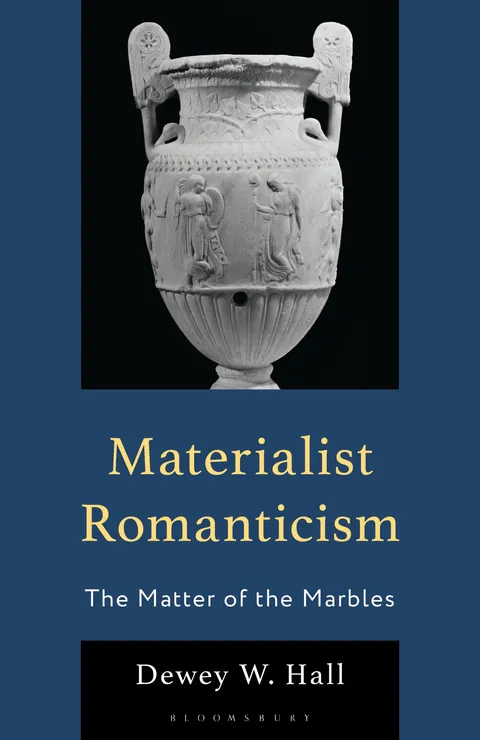
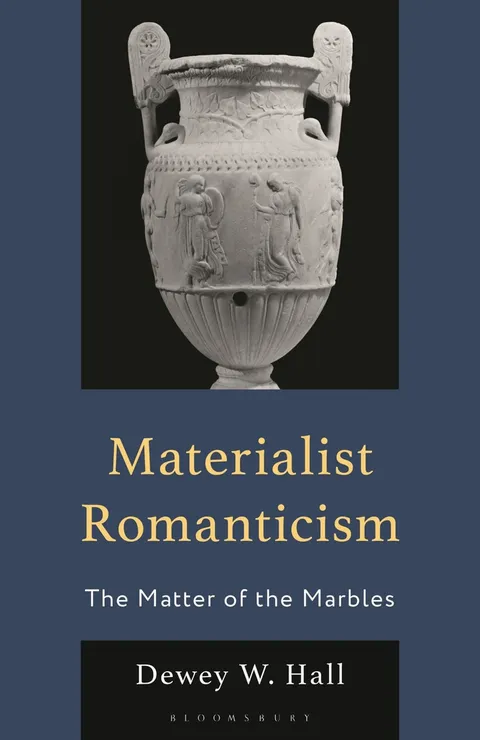
A matter-based approach to the study of nineteenth-century Romantic artifacts centering on the removal of the Parthenon sculptures from Athens, Greece by Thomas Bruce, the 7th Earl of Elgin, and sale of the prized artifacts to the British Parliament for £35,000 in 1816.
Dewey W. Hall delves into the intrigue surrounding the famed sculptures by reaching back in time to Democritus (460-370 B.C.), Aristotle (384-322 B.C.), and Epicurus (341-271 B.C.) who theorized about the atom-the basis for the materialist tradition-and Lucretius's notion of the swerve in De Rerum Natura (Of the Nature of Things) (c. 55-49 B.C.). This study includes various artistic responses to the Parthenon sculptures via the verbal and visual as represented through George Gordon, Lord Byron's Curse of Minerva (1811) and Childe Harold's Pilgrimage (1812), Benjamin Robert Haydon's sketches of the horse of Selene (1809) held at the British Museum, and John Keats's Endymion (1818) and "Ode on a Grecian Urn" (1819).
Dewey W. Hall
Dewey W. Hall is Professor of English at California State Polytechnic University, Pomona.
More by Dewey W. Hall


Why Readwise Books?
Readwise Books is an ebook & audiobook platform that automatically logs how much you and your friends read, making it fun and easy to read more. Learn more →