Report an issue
Tell us what's wrong and we'll take a look.
Thanks – we got it. We'll review and follow up if needed.
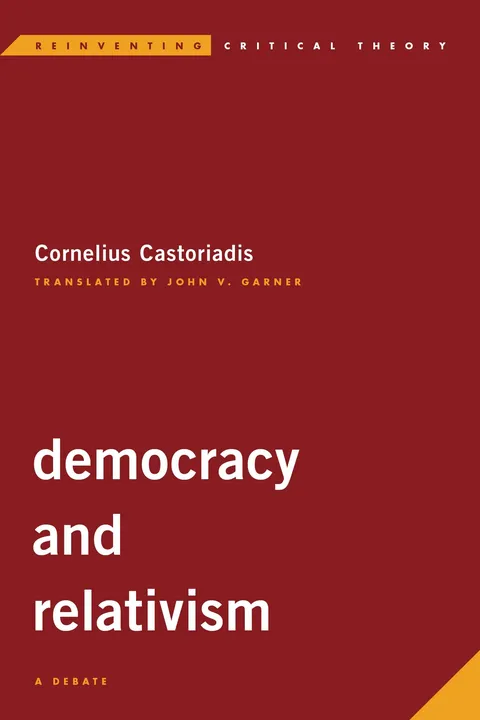
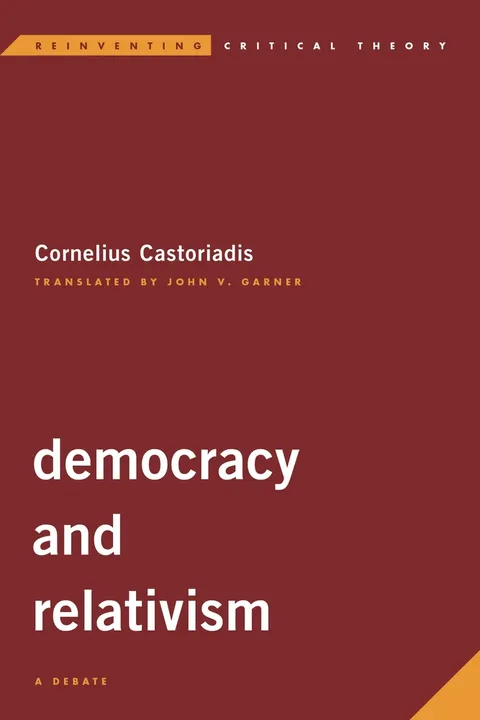
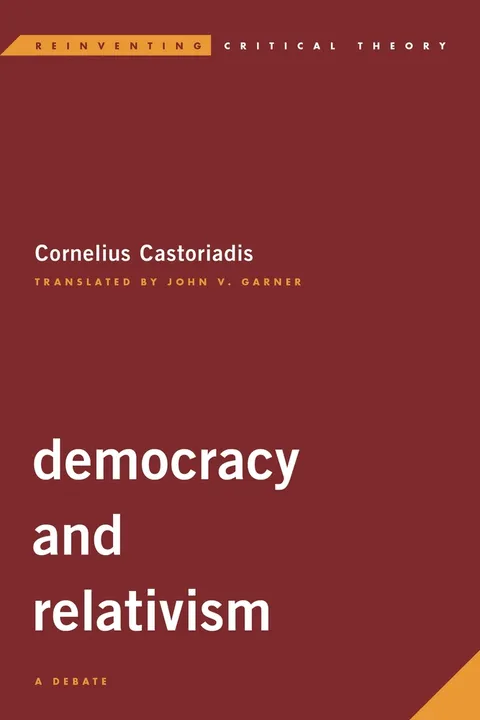
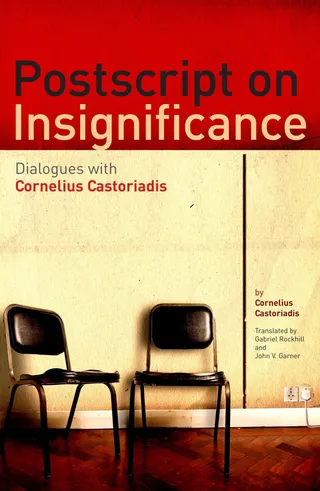
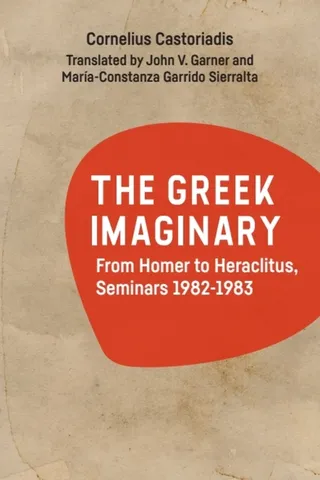
In this vibrant debate with intellectuals influenced by Marcel Mauss, including Alain Caillé and Chantal Mouffe, the incisive Greek-French activist and philosopher Cornelius Castoriadis addresses the challenge of critical thinking in an international context.
The first half explores the tradition of radical self-critique and the prospect of affirming its value in a non-ethnocentric way. While defending ancient Greek contributions to the Western tradition of radical self-critique -- including the practice of "relativizing" one's own culture, of engaging in philosophical interrogation, and of establishing democratic institutions -- Castoriadis is challenged to explore the trans-contextual features of any self-critical, or "autonomous," social institution. In the second half Castoriadis offers a penetrating critique of representative democracy, and the discussion makes important strides toward a new conception of direct democracy, of political education, and of the institutional prerequisites for the continuation of radical self-critique in politics and philosophy.
Cornelius Castoriadis
Cornelius Castoriadis (1922-1997) was a Greek-French philosopher, economist and psychoanalyst. He taught at the École des Hautes Études en Sciences Sociales in Paris and is best known for The Imaginary Institution of Society (trans. Kathleen Blamey, MIT Press, 1998). He is widely recognized as one of the foremost European thinkers of the twentieth century.
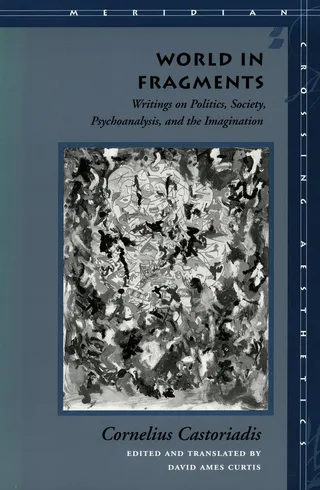
More by Cornelius Castoriadis
John V Garner
Translated by
John V. Garner is Professor of Philosophy at the University of West Georgia, USA. His recent publications include The Emerging Good in Plato's Philebus (2017).


Why Readwise Books?
Readwise Books is an ebook & audiobook platform that automatically logs how much you and your friends read, making it fun and easy to read more. Learn more →