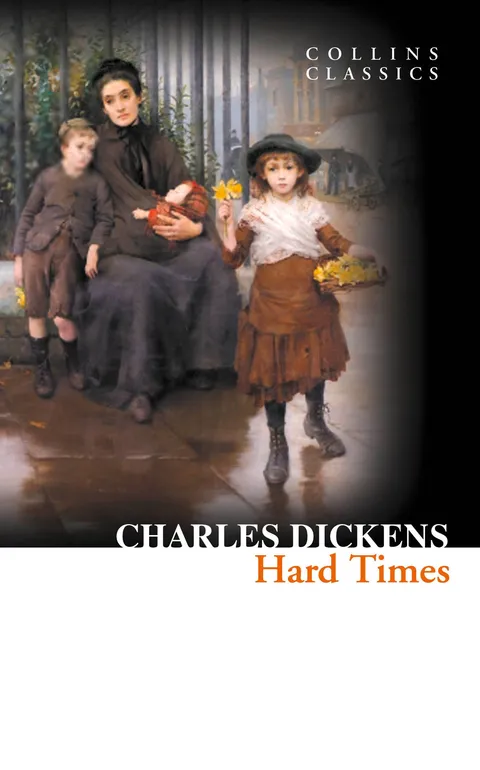
Hard Times
Report an issue
Tell us what's wrong and we'll take a look.
Thanks – we got it. We'll review and follow up if needed.
HarperCollins is proud to present our range of timeless literary classics.
‘It was a town of red brick, or of brick that would have been red if the smoke and ashes had allowed it; but as matters stood, it was a town of unnatural red and black like the painted face of a savage.’
Set in fictitious Coketown, England during the Industrial Revolution of the 1850s, Dickens wished to expose the enormous gulf between the rich and poor through his writing. In Hard Times, the social and moral purpose of his work is at its most evident. Openly ironic and satirical in its tone, Dickens suggests a mechanization of society, where the wealthy are ruthless and uncharitable towards those less fortunate than themselves.
Siblings Louisa and Tom Gradgrind are raised by their father, a harsh and pragmatic educator and his influence means that they go on to lead lives that are lacking in all areas. Louisa marries the arrogant and greedy Josiah Bounderby, ending in an unhappy pairing and the unfeeling and villainous Tom robs his own brother-in-law’s bank. As their father watches their plight, he realises that his own principles may have led to their downfall.
Charles Dickens
Charles Dickens was born in 1812 near Portsmouth where his father was a clerk in the navy pay office. The family moved to London in 1823, but their fortunes were severely impaired. Dickens was sent to work in a blacking-warehouse when his father was imprisoned for debt. Both experiences deeply affected the future novelist. In 1833, he began contributing stories to newspapers and magazines, and in 1836 started the serial publication of The Pickwick Papers. Thereafter, Dickens published his major novels over the course of the next twenty years, from Nicholas Nickleby to Little Dorrit. He also edited the journals Household Words and All the Year Round. Dickens died in June 1870.
More by Charles Dickens




Why Readwise Books?
Readwise Books is an ebook & audiobook platform that automatically logs how much you and your friends read, making it fun and easy to read more. Learn more →