Report an issue
Tell us what's wrong and we'll take a look.
Thanks – we got it. We'll review and follow up if needed.
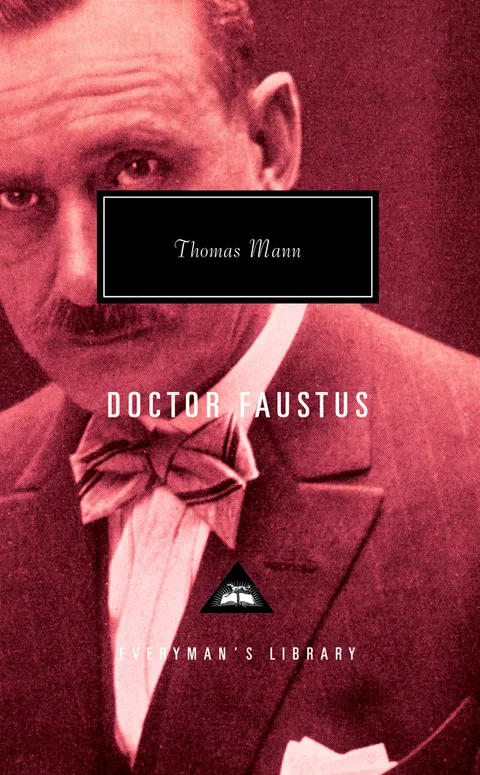
Thomas Mann wrote his last great novel, Doctor Faustus, during his exile from Nazi Germany. Although he already had a long string of masterpieces to his name, in retrospect this seems to be the novel he was born to write.
A modern reworking of the Faust legend in which a twentieth-century composer sells his soul to the devil for the artistic power he craves, the story brilliantly interweaves music, philosophy, theology, and politics. Adrian Leverkühn is a talented young composer who is willing to go to any lengths to reach greater heights of achievement. What he gets is twenty-four years of genius--years of increasingly extraordinary musical innovation intertwined with progressive and destructive madness.
A scathing allegory of Germany's renunciation of its own humanity and its embrace of ambition and nihilism, Doctor Faustus is also a profound meditation on artistic genius. Obsessively exploring the evil into which his country had fallen, Mann succeeds as only he could have in charting the dimensions of that evil; his novel has both the pertinence of history and the universality of myth.
Translated from the German by H. T. Lowe-Porter
Thomas Mann
German-born novelist, essayist, and philosopher Thomas Mann (1875-1955) won the 1929 Nobel Prize in Literature principally for his novel Buddenbrooks, which is recognized as one of the classic works of contemporary literature. Other of his novels include Death in Venice and The Magic Mountain.
More by Thomas Mann













Why Readwise Books?
Readwise Books is an ebook & audiobook platform that automatically logs how much you and your friends read, making it fun and easy to read more. Learn more →