Report an issue
Tell us what's wrong and we'll take a look.
Thanks – we got it. We'll review and follow up if needed.
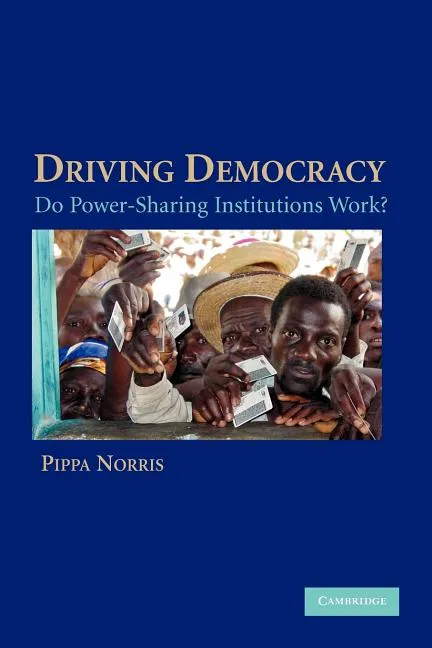
Proposals for power-sharing constitutions remain controversial, as highlighted by current debates in Iraq, Afghanistan, Nepal, and Sudan. This book updates and refines the theory of consociationalism, taking account of the flood of contemporary innovations in power-sharing institutions that have occurred worldwide. The book classifies and compares four types of political institutions: the electoral system, parliamentary or presidential executives, unitary or federal states, and the structure and independence of the mass media. The study tests the potential advantages and disadvantages of each of these institutions for democratic governance. Cross-national time-series data concerning trends in democracy are analyzed for all countries worldwide since the early 1970s. Chapters are enriched by comparing detailed case studies. The mixed-method research design illuminates the underlying causal mechanisms by examining historical developments and processes of institutional change within particular nations and regions. The conclusion draws together the results and the practical lessons for policymakers.
Pippa Norris
Pippa Norris is the McGuire Lecturer in Comparative Politics at the John F. Kennedy School of Government, Harvard University, and Laureate Fellow and Professor of Government and International Relations at Sydney University. She is the director of the Electoral Integrity Project. Recent books by this award-winning author include Driving Democracy (Cambridge, 2008), Cosmopolitan Communications (Cambridge, 2009), Democratic Deficit (Cambridge, 2011), Making Democratic Governance Work (Cambridge, 2012), Why Electoral Integrity Matters (Cambridge, 2014), and Why Elections Fail (Cambridge, 2015).
More by Pippa Norris











Why Readwise Books?
Readwise Books is an ebook & audiobook platform that automatically logs how much you and your friends read, making it fun and easy to read more. Learn more →