Report an issue
Tell us what's wrong and we'll take a look.
Thanks – we got it. We'll review and follow up if needed.
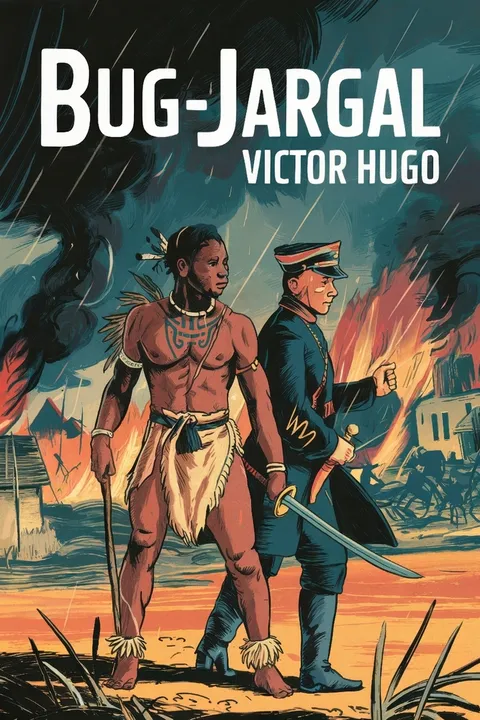
1791. Saint-Domingue erupts in the most radical revolution the world has ever seen.
Leopold d'Auverney is a young French officer on his uncle's plantation, engaged to his beautiful cousin Marie, living the privileged life of a colonial planter. Pierrot is a slave on that same plantation-silent, dignified, bearing his bondage with mysterious nobility.
When the enslaved people of Saint-Domingue rise in rebellion, Leopold discovers that Pierrot is actually Bug-Jargal, nephew of an African king, sold into slavery through treachery. As the colony descends into war between revolutionaries fighting for freedom and colonists defending slavery, these two men-enemies by circumstance, allies by choice-forge an unlikely bond that transcends the violence consuming their world.
Bug-Jargal leads rebel forces with courage and honor that shame the civilization that enslaved him. Leopold fights for the colonial system while recognizing its fundamental injustice. Both love the same woman. Both save each other's lives. And both will be destroyed by forces larger than individual friendship or honor.
Written when Victor Hugo was just twenty-one, Bug-Jargal marks the beginning of his lifelong engagement with themes of oppression and human dignity. Set against the backdrop of the Haitian Revolution-the most consequential slave uprising in history-the novel combines romantic adventure with early exploration of the moral questions that would define Hugo's career. While its treatment of race and revolution reflects the limitations of its era, the work demonstrates the young author's passionate commitment to justice and his gift for dramatic storytelling.
Some revolutions are fought with weapons. Some with words. And some challenge everything we believe about freedom, dignity, and what it means to be human.
Victor Hugo's passionate early novel of slavery, rebellion, and the bonds that transcend the boundaries of race and war.
Victor Hugo
Victor Hugo (1802-1885) is one of the most well-regarded French writers of the nineteenth century. He was a poet, novelist and dramatist, and he is best remembered in English as the author of Notre-Dame de Paris (The Hunchback of Notre-Dame) (1831) and Les Misérables (1862).
Hugo was born in Besançon, and became a pivotal figure of the Romantic movement in France, involved in both literature and politics. He founded the literary magazine Conservateur Littéraire in 1819, aged just seventeen, and turned his hand to writing political verse and drama after the accession to the throne of Louis-Philippe in 1830. His literary output was curtailed following the death of his daughter in 1843, but he began a new novel as an outlet for his grief. Completed many years later, this novel became Hugo's most notable work, Les Misérables.
More by Victor Hugo


Why Readwise Books?
Readwise Books is an ebook & audiobook platform that automatically logs how much you and your friends read, making it fun and easy to read more. Learn more →