Report an issue
Tell us what's wrong and we'll take a look.
Thanks – we got it. We'll review and follow up if needed.
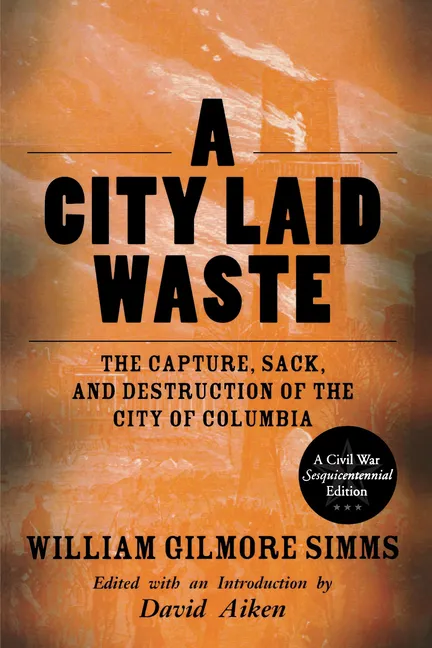
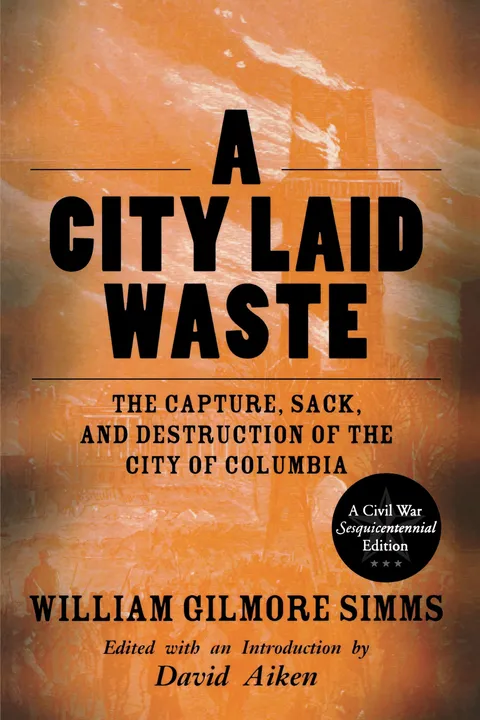
"A graphic account of the horrors, the brutality and sometimes wanton destruction of warfare, particularly of civil war." —Charleston (SC) Post and Courier In the first reissue of these documents since 1865, A City Laid Waste captures in riveting detail the destruction of South Carolina's capital city. William Gilmore Simms (1806-1870), a native South Carolinian and one of the nation's foremost men of letters, was in Columbia and witnessed firsthand the city's capture and destruction. A renowned novelist and poet, who was also an experienced journalist and historian, Simms deftly recorded the events of February 1865 in a series of eyewitness accounts published in the first ten issues of the Columbia Phoenix and reprinted here. His record of burned buildings constitutes the most authoritative information available on the extent of the damage. Simms historian David Aiken provides a historical and literary context for Simms's reportage. In his introduction Aiken clarifies the significance of Simms's articles and draws attention to factors most important for understanding the occupation's impact on the city of Columbia. "A shrewd viewer of the war scene in Columbia, famed Southern writer William Gilmore Simms published stinging, courageous exposés of the doings of the Northern forces, even when threatened with arrest. The restoration of his candid firsthand accounts of the destruction wrought by Sherman's forces against the South Carolina capitol and its inhabitants is a great service to all who study and appreciate Southern history and literature." —James Everett Kibler, author of Our Fathers' Fields
William Gilmore Simms
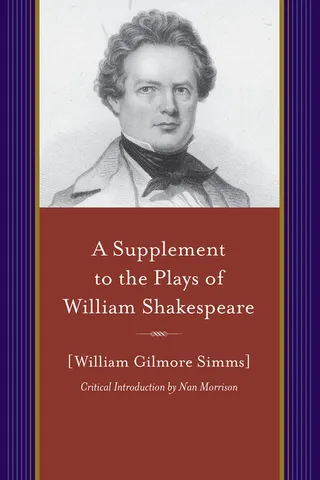
William Gilmore Simms was a poet, novelist, politician, and historian from the American South. His writings rose to prominence during the nineteenth century, with Edgar Allan Poe proclaiming him the best author America had ever produced. He is still regarded by literary academics as a prominent figure in antebellum Southern literature. He is also renowned for his ardent support for slavery and his hostility to Uncle Tom's Cabin, which prompted him to write critiques and the pro-slavery novel The Sword and the Distaff (1854). During his literary career, he worked as an editor for various journals and newspapers, and he also served in the South Carolina House of Representatives. Simms was born on April 17, 1806, in Charleston, South Carolina, of Scots-Irish forebears. His mother, Harriet Ann Augusta (née Singleton, 1784-1808), died in his infancy, and his father, William Gilmore Simms Senior (1762-1830), failed in business and joined Coffee's Indian fighters. Simms was reared by his maternal grandmother, Jane Miller Singleton Gates, who lived during the American Revolutionary War and told him stories about it. Simms worked as a drugstore clerk during his adolescence and intended to become a doctor. Simms began studying law when he was eighteen (about 1824). In 1841, the University of Alabama awarded him an honorary LLD.
More by William Gilmore Simms


Why Readwise Books?
Readwise Books is an ebook & audiobook platform that automatically logs how much you and your friends read, making it fun and easy to read more. Learn more →