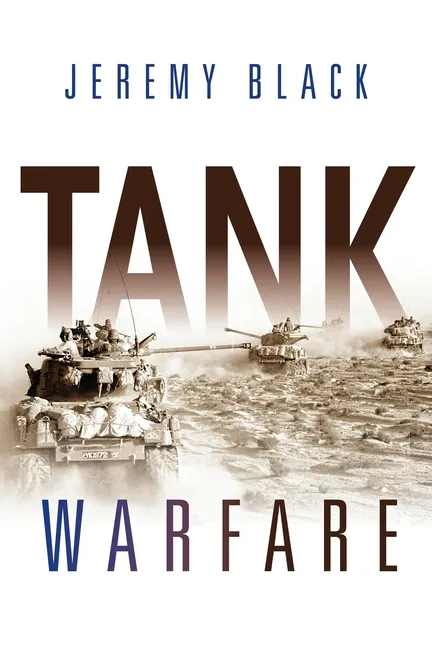
Tank Warfare
Report an issue
Tell us what's wrong and we'll take a look.
Thanks – we got it. We'll review and follow up if needed.
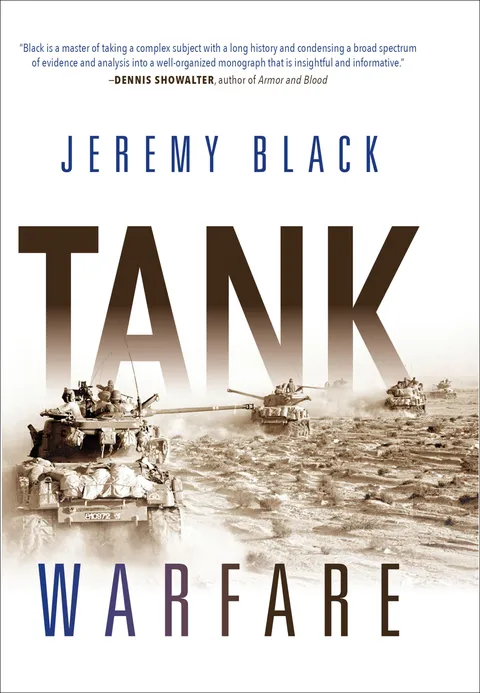
The story of the battlefield in the 20th century was dominated by a handful of developments. Foremost of these was the introduction and refinement of tanks. In Tank Warfare, prominent military historian Jeremy Black offers a comprehensive global account of the history of tanks and armored warfare in the 20th and 21st centuries. First introduced onto the battlefield during the World War I, tanks represented the reconciliation of firepower and mobility and immediately seized the imagination of commanders and commentators concerned about the constraints of ordinary infantry. The developments of technology and tactics in the interwar years were realized in the German blitzkrieg in World War II and beyond. Yet the account of armor on the battlefield is a tale of limitations and defeats as well as of potential and achievements. Tank Warfare examines the traditional narrative of armored warfare while at the same time challenging it, and Black suggests that tanks were no "silver bullet" on the battlefield. Instead, their success was based on their inclusion in the general mix of weaponry available to commanders and the context in which they were used.
Jeremy Black
Jeremy Black has recently retired as Professor of History at the University of Exeter. Graduating from Cambridge with a starred first, he did postgraduate work at Oxford and then taught at Durham, eventually as professor, before moving to Exeter in 1996. He has lectured extensively in Australia, Canada, Denmark, France, Germany, Italy, New Zealand, and the United States, where he has held visiting chairs at West Point, Texas Christian University, and Stillman College. He was appointed to the Order of Membership of the British Empire for services to stamp design. His books include The British Seaborne Empire, Contesting History and Rethinking World War Two.
More by Jeremy Black




Why Readwise Books?
Readwise Books is an ebook & audiobook platform that automatically logs how much you and your friends read, making it fun and easy to read more. Learn more →