
Prophets of Deceit
A Study of the Techniques of the American Agitator
Report an issue
Tell us what's wrong and we'll take a look.
Thanks – we got it. We'll review and follow up if needed.
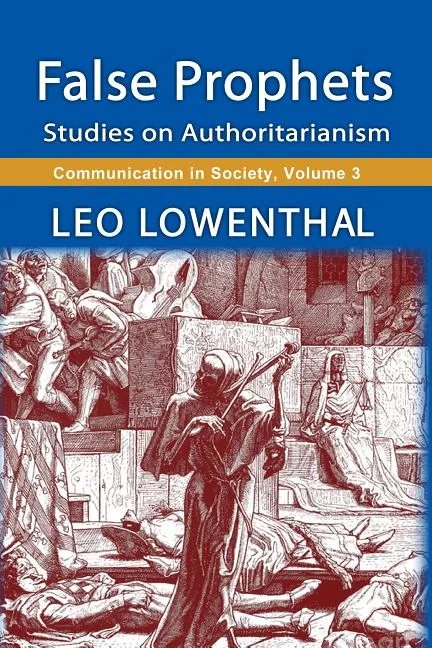
How authoritarian and racist discourse functions
A classic book that analyzes and defines media appeals specific to American pro-fascist and anti-Semite agitators of the 1940s, such as the application of psychosocial manipulation for political ends. The book details psychological deceits that idealogues or authoritarians commonly used. The techniques are grouped under the headings "Discontent", "The Opponent", "The Movement" and "The Leader". The authors demonstrate repetitive patterns commonly utilized, such as turning unfocused social discontent towards a targeted enemy. The agitator positions himself as a unifying presence: he is the ideal, the only leader capable of freeing his audience from the perceived enemy. Yet, as the authors demonstrate, he is a shallow person who creates social or racial disharmony, thereby reinforcing that his leadership is needed. The authors believed fascist tendencies in America were at an early stage in the 1940s, but warned a time might come when Americans could and would be "susceptible to ... [the] psychological manipulation" of a rabble rouser. A book once again relevant in the Trump era, as made clear by Alberto Toscano's new introduction.


Norbert Guterman
Norbert Guterman (1900-1984) was a scholar, and translator of scholarly and literary works from French, Polish and Latin into English. Born in Warsaw, Guterman attended the University of Warsaw, where he studied psychology. He moved to Paris to study at the Sorbonne, where he continued his studies in psychology, receiving degrees in 1922 and 1923. In the 1930s, Guterman worked closely with French Marxist theorist Henri Lefebvre in popularizing the Marxist notions of alienation and mystification. He published translations of Marx's early works, which were often the first publications of these works in any language. Guterman, who was Jewish, moved to the United States in 1933, where he took on translation work for the Monthly Review, eventually becoming an editor. In 1936 he became an associate member of the Institute for Social Research on the recommendation of Max Horkheimer who held a great deal of respect for him.













Why Readwise Books?
Readwise Books is an ebook & audiobook platform that automatically logs how much you and your friends read, making it fun and easy to read more. Learn more →