The Open Door (Fantasy and Horror Classics)
Report an issue
Tell us what's wrong and we'll take a look.
Thanks – we got it. We'll review and follow up if needed.
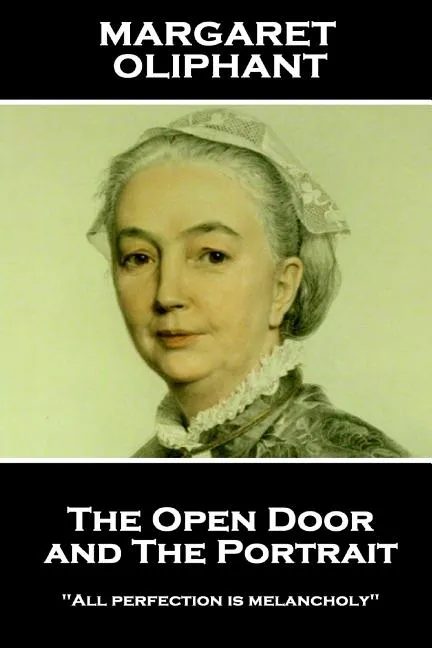
Not all doors lead home. Some merely echo a cry from the darkness.
Colonel Mortimer, recently returned from India, believes the grand Scottish estate of Brentwood will be the perfect place for his family to start a new, tranquil life. But the house shares its grounds with the chilling ruins of an older structure, where a single, broken gable stands a solitary wall containing a vacant, perpetually open doorway that leads to nothing but shadows.
The peace is shattered when Mortimer's sensitive young son, Roland, falls dangerously ill, tormented not by a sight, but by a sound: a pitiful, moaning cry for help that seems to issue from the ruined archway.
As the Colonel confronts the haunting, he is forced to abandon his upper-class skepticism and face a supernatural reality that defies all logic. He must investigate the desolate corner of his own property to find the source of the sorrow and, perhaps, save a tormented soul whose pleas threaten his son's sanity.
Praised by M.R. James for its mastery of "pity and beauty," The Open Door is a Victorian ghost story par excellence, using atmosphere and dread to explore the enduring themes of grief, parental love, and the permeable boundary between the living and the unseen.
The sound is just a whisper, but the terror is deafening.
Oliphant
Margaret Oliphant was a Scottish author and historical writer who usually wrote under the name Mrs. Oliphant. She was born Margaret Oliphant Wilson on April 4, 1828, and died on June 20, 1897. She writes "domestic realism, the historical novel, and tales of the supernatural" as her short stories. Margaret Oliphant was born in Wallyford, near Musselburgh, East Lothian. She was the only daughter and youngest child still living of Margaret Oliphant (c. 1789-17 September 1854) and Francis W. Wilson, a clerk. We lived in Lasswade, Glasgow, and Liverpool when she was a child. In Wallyford, a street called Oliphant Gardens is named after her. As a girl, she was always trying new things with writing. Passages in the Life of Mrs. Margaret Maitland, her first book, came out in 1849. This was about the mostly successful Scottish Free Church movement, which was something her folks agreed with. Next came Caleb Field in 1851, the same year she met publisher William Blackwood in Edinburgh and was asked to write for Blackwood's Magazine. She did so for the rest of her life and wrote over 100 articles, including one that criticized Arthur Dimmesdale in Nathaniel Hawthorne's "The Scarlet Letter."
More by Oliphant







Why Readwise Books?
Readwise Books is an ebook & audiobook platform that automatically logs how much you and your friends read, making it fun and easy to read more. Learn more →