Report an issue
Tell us what's wrong and we'll take a look.
Thanks – we got it. We'll review and follow up if needed.
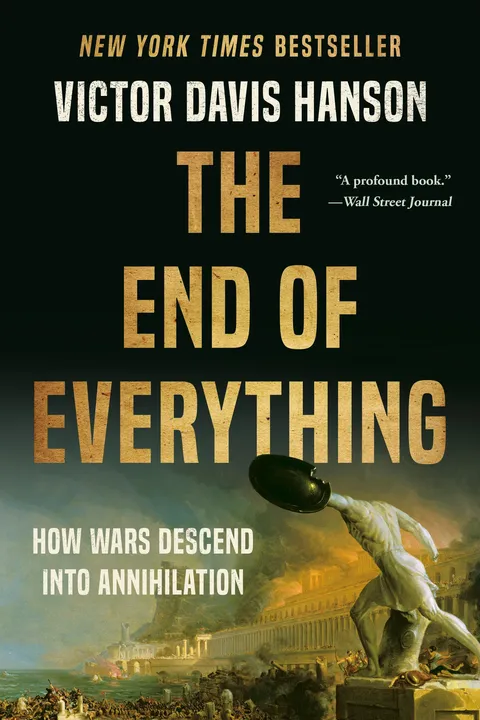
A major military historian explains how and why some societies chose to destroy their foes, and warns that similar wars of obliteration are possible in our time.
"A profound book." --Wall Street Journal
War can settle disputes, topple tyrants, and bend the trajectory of civilization--sometimes to the breaking point. From Troy to Hiroshima, moments when war has ended in utter annihilation have reverberated through the centuries, signaling the end of political systems, cultures, and epochs. Though much has changed over the millennia, human nature remains the same. Modern societies are not immune from the horror of a war of extinction.
In The End of Everything, military historian Victor Davis Hanson narrates a series of sieges and sackings that span the age of antiquity to the conquest of the New World to show how societies descend into barbarism and obliteration. In the stories of Thebes, Carthage, Constantinople, and Tenochtitlan, he depicts war's drama, violence, and folly. Highlighting the naivete that plagued the vanquished and the wrath that justified mass slaughter, Hanson delivers a sobering call to contemporary readers to heed the lessons of obliteration lest we blunder into catastrophe once again.
Victor Davis Hanson
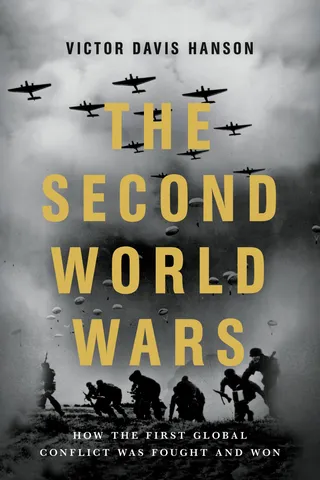
Victor Davis Hanson is a senior fellow in military history at the Hoover Institution at Stanford University and a professor emeritus of classics at California State University, Fresno. He is the author of more than two dozen books, ranging in topics from ancient Greece to modern America, including The Second World Wars: How the First Global Conflict Was Fought and Won. He lives in Selma, California.
More by Victor Davis Hanson



















Why Readwise Books?
Readwise Books is an ebook & audiobook platform that automatically logs how much you and your friends read, making it fun and easy to read more. Learn more →