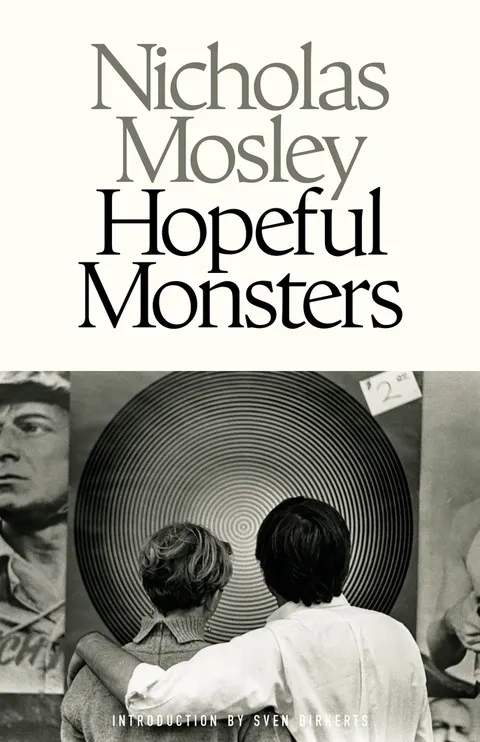
Hopeful Monsters
Report an issue
Tell us what's wrong and we'll take a look.
Thanks – we got it. We'll review and follow up if needed.
Thirty-five years after its original publication, Hopeful Monsters reemerges as one of the "grand intellectual dramas" of the 20th century (--The New York Times).
A sweeping, comprehensive epic, Hopeful Monsters tells the story of the love affair between Max, an English student studying physics and biology, and Eleanor, a German Jew and political radical. Together, Max and Eleanor participate in the great political and intellectual movements which shape the twentieth-century, taking them from Cambridge and Berlin to the Spanish Civil War, Russia, the Sahara, and finally to Los Alamos to witness the first nuclear test.
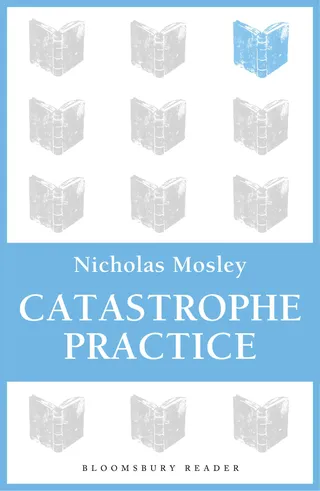
Originally published as the culminating volume of a series of five works of fiction entitled "Catastrophe Practice" that The Chicago Tribune called "one of the most important extended literary projects of [the 20th] century," Hopeful Monsters is the first reissue in a new Dalkey Archive initiative to bring Mosley's epistolary genius back into circulation for modern readers.
Nicholas Mosley
Born in London, Mosley was educated at Eton and Balliol College, Oxford and served in Italy during the Second World War, winning the Military Cross for bravery. He succeeded as 3rd Baron Ravensdale in 1966 and, on the death of his father on 3 December 1980, he also succeeded to the Baronetcy. His father, Sir Oswald Mosley, founded the British Union of Fascists in 1932 and was a supporter of Benito Mussolini. Sir Oswald was arrested in 1940 for his antiwar campaigning, and spent the majority of World War II in prison. As an adult, Nicholas was a harsh critic of his father in "Beyond the Pale: Sir Oswald Mosley and Family 1933-1980" (1983), calling into question his father's motives and understanding of politics. Nicholas' work contributed to the 1998 Channel 4 television programme titled 'Mosley' based on his father's life. At the end of the mini-series, Nicholas is portrayed meeting his father in prison to ask him about his national allegiance. Mosley began to stammer as a young boy, and attended weekly sessions with speech therapist Lionel Logue in order to help him overcome the speech disorder. Mosley says his father claimed never really to have noticed his stammer, but feels Sir Oswald may have been less aggressive when speaking to him than he was towards other people as a result.
More by Nicholas Mosley




Why Readwise Books?
Readwise Books is an ebook & audiobook platform that automatically logs how much you and your friends read, making it fun and easy to read more. Learn more →