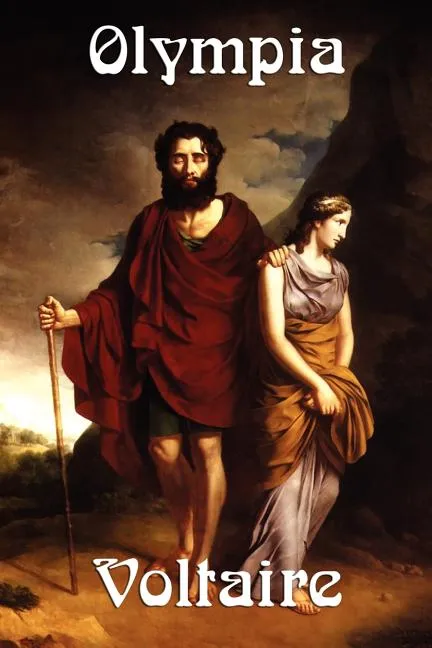
Olympia
A Tragedy of Power, Loyalty, and Enlightenment Thought
Report an issue
Tell us what's wrong and we'll take a look.
Thanks – we got it. We'll review and follow up if needed.
Voltaire's Olympia is a dramatic work that reflects the Enlightenment writer's engagement with classical themes, moral conflict, and the tensions between authority and individual will. Drawing upon historical and theatrical traditions, the play presents a narrative shaped by political intrigue, personal loyalty, and the consequences of power.
As with much of Voltaire's dramatic writing, Olympia combines formal structure with philosophical undertones, exploring questions of justice, governance, and human motivation within a controlled dramatic framework. The work reflects eighteenth-century theatrical conventions while also carrying the intellectual imprint of its author's broader critique of established systems and inherited authority.
Olympia remains of interest as part of Voltaire's dramatic output and as an example of Enlightenment-era theatre. It offers readers insight into the intersection of literature and philosophy during a period of significant intellectual change, and is suited to those studying European drama, political thought, and the development of modern literary forms.
Voltaire
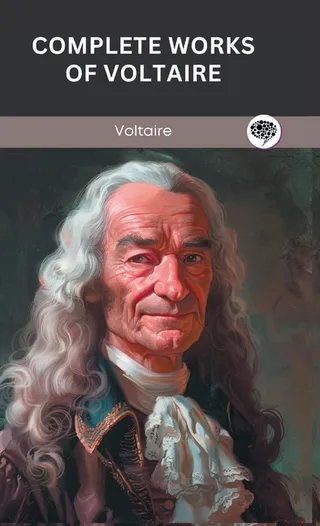
Fran ois-Marie Arouet, better known by his pen name Voltaire, was a French writer, philosopher, and historian born on November 21, 1694, in Paris. He is best remembered for his sharp wit, satirical works, and criticism of institutions such as the Catholic Church and the practice of slavery. Voltaire was a strong advocate for civil liberties, including freedom of speech, freedom of religion, and the separation of church and state, principles that shaped much of his writing. Throughout his life, Voltaire was influenced by thinkers like John Locke and Isaac Newton, and his works left a lasting impact on later Enlightenment figures, such as Jean-Jacques Rousseau and Denis Diderot. Voltaire s writings often challenged authority and sought to promote reason, tolerance, and individual rights. He lived through a time of significant political and social change, and his works were instrumental in shaping modern ideas about governance, religion, and society. Voltaire passed away on May 30, 1778, in Paris, leaving behind a legacy that continues to influence Western thought.
More by Voltaire
















Why Readwise Books?
Readwise Books is an ebook & audiobook platform that automatically logs how much you and your friends read, making it fun and easy to read more. Learn more →