Report an issue
Tell us what's wrong and we'll take a look.
Thanks – we got it. We'll review and follow up if needed.
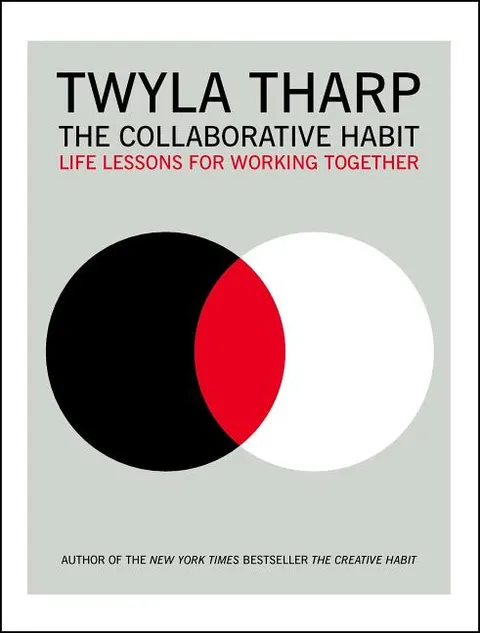
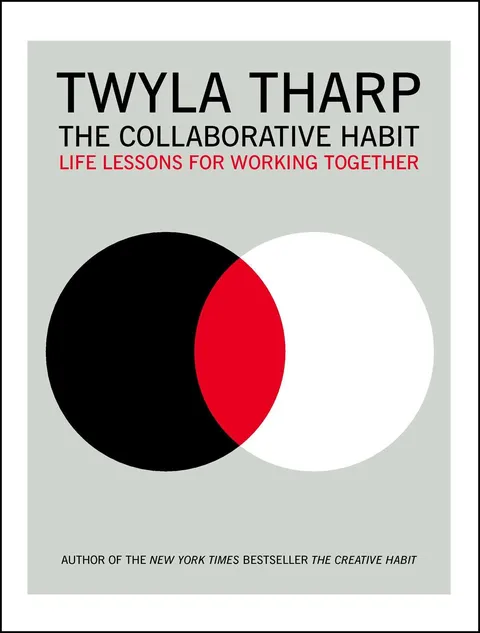
In a career that has spanned four decades, choreographer Twyla Tharp has collaborated with great musicians, designers, thousands of dancers, and almost a hundred companies. She's experienced the thrill of shared achievement and has seen what happens when group efforts fizzle. Her professional life has been -- and continues to be -- one collaboration after another.
In this practical sequel to her national bestseller The Creative Habit, Tharp explains why collaboration is important to her -- and can be for you. She shows how to recognize good candidates for partnership and how to build one successfully, and analyzes dysfunctional collaborations. And although this isn't a book that promises to help you deepen your romantic life, she suggests that the lessons you learn by working together professionally can help you in your personal relationships.
These lessons about planning, listening, organizing, troubleshooting, and using your talents and those of your coworkers to the fullest are not limited to the arts; they are the building blocks of working with others, like if you're stuck in a 9-to-5 job and have an unhelpful boss.
Tharp sees collaboration as a daily practice, and her book is rich in examples from her career. Starting as a twelve-year-old teaching dance to her brothers in a small town in California and moving through her work as a fledgling choreographer in New York, she learns lessons that have enriched her collaborations with Billy Joel, Jerome Robbins, Mikhail Baryshnikov, Bob Dylan, Elvis Costello, David Byrne, Richard Avedon, Milos Forman, Norma Kamali, and Frank Sinatra.
Among the surprising and inspiring points Tharp makes in The Collaborative Habit:
-Nothing forces change more dramatically than a new partnership.
-In a good collaboration, differences between partners mean that one plus one will always equal more than two. A good collaborator is easier to find than a good friend. If you've got a true friendship, you want to protect that. To work together is to risk it.
-Everyone who uses e-mail is a virtual collaborator.
-Getting involved with your collaborator's problems may distract you from your own, but it usually leads to disaster.
-When you have history, you have ghosts. If you're returning to an old collaboration, begin at the beginning. No evocation of old problems and old solutions.
-Tharp's conclusion: What we can learn about working creatively and in harmony can trans- form our lives, and our world.
Jesse Kornbluth
Jesse Kornbluth is the founder of HeadButler.com, a cultural concierge site. He has served as editorial director of AOL, cofounded Bookreporter.com, and has been a contributing editor to Vanity Fair and New York. The author of four nonfiction books, including Highly Confident: The Crime and Punishment of Michael Milken, he has written screenplays for Paul Newman, Robert De Niro, ABC, PBS, and Warner Bros. Married Sex is Kornbluth’s first novel. He lives in Manhattan with his family.






Why Readwise Books?
Readwise Books is an ebook & audiobook platform that automatically logs how much you and your friends read, making it fun and easy to read more. Learn more →