Report an issue
Tell us what's wrong and we'll take a look.
Thanks – we got it. We'll review and follow up if needed.
The photos in this edition are black and white.
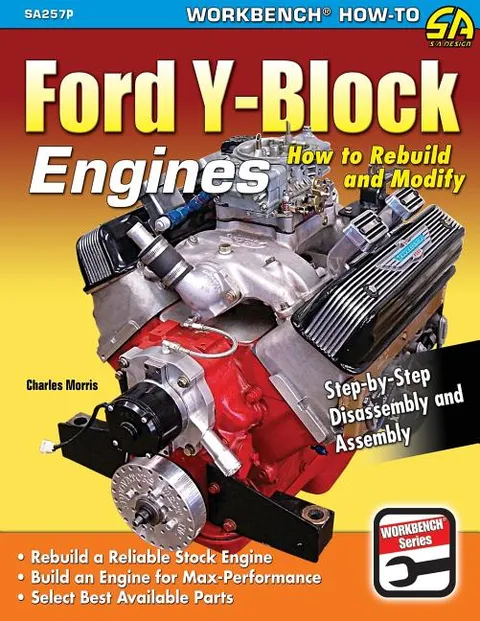
As Ford cars grew in both size and weight after WWII, the need for a more powerful and robust engine than the aging Flathead was becoming apparent. The successor of the Flathead engine, the Ford Y-block V-8 engine delivered far better performance and it didn't have the inherent oiling problems of the Flathead. This engine featured deep skirt block design, and its layout resembles a "Y," hence the Y-block name. Manufactured displacements of 239, 256, 272, 292, and 312 cubic inches, this stout engine grew in displacement over the years to meet demands for more power. It powered a variety of Ford trucks and cars from 1952 to 1964, including the Thunderbird, Edsel, and the famous 53-56 pickups.
The Ford Y-block has been largely ignored for years, but now the engine is enjoying a renaissance. With the renewed interest, many new high-performance parts are on the market. In this comprehensive rebuild and high-performance build-up guide, a step-by-step rebuild of two stock engines is provided, complete with explanatory text and captions as well as full-color photos. During the rebuild process, you learn the unique features of this engine series and how to build a strong and reliable engine. In addition, author Charles Morris profiles the building a modified supercharged 292 engine that uses the latest performance parts and technology developed specifically for this engine series. You are shown how to machine and prep the block, refurbish the cylinder heads, and select the optimal rotating assembly for a particular horsepower level.
The last book published on Y-Blocks was more than 20 years ago, but there has not been an authoritative step-by-step engine rebuild and high-performance book until now. The enthusiasts have been clamoring for information and of course owners will find invaluable coverage of the new parts, machining process, and assembly techniques. If you're a Y-block enthusiast, you will have to have this book.
Charles Morris
Charles Morris was an American journalist, novelist, and writer of historical textbooks, born on October 1, 1833, in Chester, Pennsylvania. He gained popularity in the late 19th and early 20th centuries for his accessible and engaging works that introduced general readers to significant historical events, figures, and scientific ideas. He wrote extensively on American history, world history, and contemporary issues of his time, often aiming to bridge the gap between academic scholarship and public understanding. Morris s writing style combined clarity with detail, making his books appealing to both students and casual readers. His body of work includes not only history but also explorations into science and evolution, where he showed a strong commitment to rational thought and evidence-based explanations. As a novelist and essayist, he was deeply concerned with progress, education, and moral development, often advocating for the pursuit of knowledge over superstition. Morris lived and worked primarily in Pennsylvania, contributing regularly to periodicals and serialized publications. His writings reflect the optimism and reformist spirit of his era. He died in Philadelphia on September 7, 1922. His parents were not widely documented, and little is known about his early family life.
More by Charles Morris










Why Readwise Books?
Readwise Books is an ebook & audiobook platform that automatically logs how much you and your friends read, making it fun and easy to read more. Learn more →