Report an issue
Tell us what's wrong and we'll take a look.
Thanks – we got it. We'll review and follow up if needed.
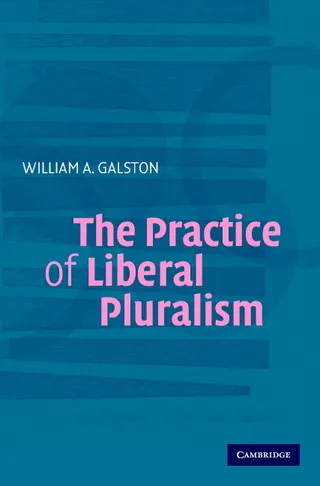
This book is a major contribution to the current theory of liberalism by an eminent political theorist. It challenges the views of such theorists as Rawls, Dworkin, and Ackerman who believe that the essence of liberalism is that it should remain neutral concerning different ways of life and individual conceptions of what is good or valuable. Professor Galston argues that the modern liberal state is committed to a distinctive conception of the human good, and to that end has developed characteristic institutions and practices--representative governments, diverse societies, market economies, and zones of private action--in the pursuit of specific public purposes that give unity to the liberal state. These purposes guide liberal public policy, shape liberal justice, require the practice of liberal virtues, and rest on a liberal public culture. Consequently the diversity characteristic of liberal societies is limited by their institutional, personal, and cultural preconditions.


Why Readwise Books?
Readwise Books is an ebook & audiobook platform that automatically logs how much you and your friends read, making it fun and easy to read more. Learn more →