Report an issue
Tell us what's wrong and we'll take a look.
Thanks – we got it. We'll review and follow up if needed.

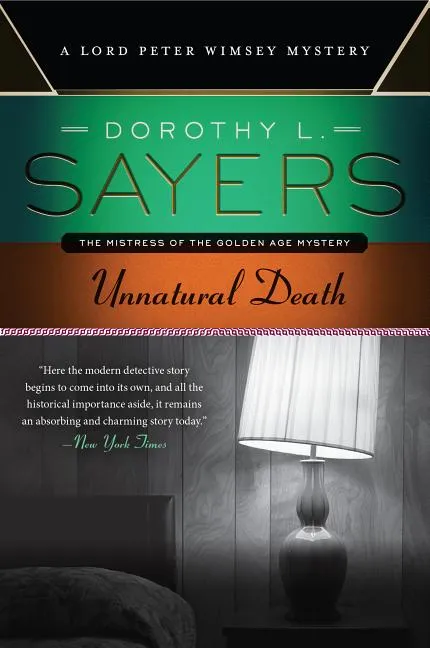
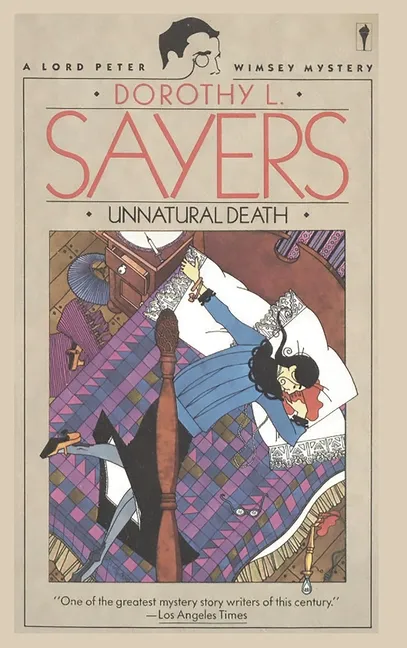
Lord Peter Wimsey and his friend Chief Inspector Parker are told about the death, in late 1925, of an elderly woman named Agatha Dawson who had been suffering from terminal cancer. She was being cared for by Mary Whittaker, her great-niece and a trained nurse. Miss Dawson had an extreme aversion to making a will, believing that Miss Whittaker, her only known relative, would naturally inherit everything. Wimsey is intrigued in spite of the fact that there is no evidence of any crime (a post-mortem found no sign of foul play), nor any apparent motive (on Miss Dawson's death her estate did indeed pass, as she had expected and wished, to her great-niece).
In Murder in the Closet: Essays on Queer Clues in Crime Fiction before Stonewall (2017), Noah Stewart described Mary Whitaker as being "to my knowledge the most clearly delineated homosexual character in Golden Age detective fiction, despite the word 'lesbian' never being used, and she's depicted as enticing a young girl into a life of homosexuality". The episode in which Mary Whittaker is kissed by Wimsey is "the closest that a writer in 1927 would be able to come to saying that a character was a lesbian and that kissing a man made her want to vomit." Laura Vorachek argued that, in the novel, "Sayers attempts to challenge the prevalent cultural associations of blackness and criminality.
Dorothy L Sayers
Dorothy L. Sayers (1893–1957) was a British playwright, scholar, and acclaimed author of mysteries, best known for her books starring the gentleman sleuth Lord Peter Wimsey. While working as an advertising copywriter, Sayers began writing Whose Body? (1923), the first Wimsey mystery, followed by ten sequels and several short stories. Sayers set the Wimsey novels between the two World Wars, giving them a realistic tone by incorporating details from contemporary issues such as advertising, women’s education, and veterans’ health. Sayers also wrote theological essays and criticism during and after World War II, and in 1949 published the first volume of a translation of Dante’s Divine Comedy. Although she considered this translation to be her best work, it is for her elegantly constructed detective fiction that Sayers remains best remembered.
More by Dorothy L Sayers












Why Readwise Books?
Readwise Books is an ebook & audiobook platform that automatically logs how much you and your friends read, making it fun and easy to read more. Learn more →