
Report an issue
Tell us what's wrong and we'll take a look.
Thanks – we got it. We'll review and follow up if needed.

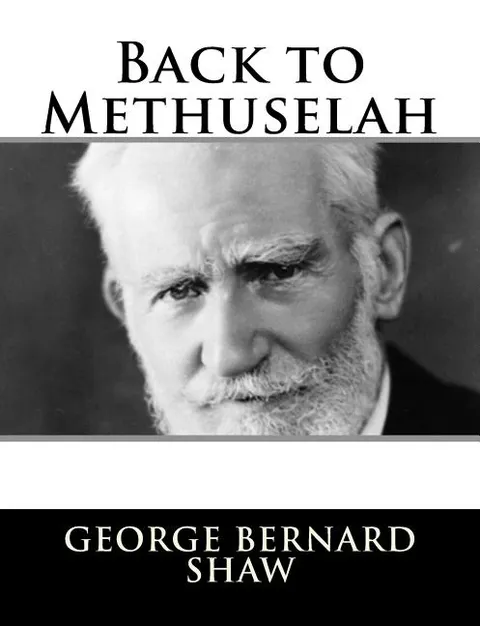
George Bernard Shaw begins with a radical proposition: what if humanity's greatest problem is that human beings simply do not live long enough to become wise?
In Back to Methuselah, Shaw transforms that question into an extraordinary cycle of five plays spanning thousands of years. Beginning with Adam and Eve in the Garden of Eden and moving through Shaw's own era into an increasingly distant future, the work imagines humanity gradually escaping the limits of its ordinary lifespan-and asks what longer life might do to politics, civilization, knowledge, and human consciousness itself.
Published in 1921, Back to Methuselah grew from Shaw's theory of Creative Evolution and his dissatisfaction with purely mechanical explanations of evolutionary change. For Shaw, longevity is not merely a fantasy of living longer. Short-lived human beings inherit complicated societies, struggle for decades to understand them, and often die just as experience begins to produce wisdom. Political institutions are therefore repeatedly entrusted to people whose lives may be too brief for the responsibilities civilization has placed upon them.
Across the five plays, Shaw follows this idea from biblical beginnings to speculative futures. In the Beginning reimagines Adam, Eve, Cain, and the origins of death while introducing the possibility that lifespan itself might change. The Gospel of the Brothers Barnabas brings the argument into the modern world, where the idea of living for centuries collides with politics and disbelief. Later plays move progressively farther into the future as long-lived humans emerge and society begins to reorganize around lives measured not in decades but in centuries.
As the timescale expands, so does Shaw's ambition. Politics, marriage, reproduction, education, government, religion, art, and scientific knowledge all look different when viewed by beings who may live for hundreds of years. Institutions designed for short-lived people begin to appear temporary, while humanity itself becomes only one stage in a much longer evolutionary process.
The result is unlike almost anything else in Shaw's dramatic work: part philosophical comedy, part speculative fiction, part biblical reimagining, and part evolutionary thought experiment. Shaw's characteristic arguments and wit remain, but they operate on an enormous canvas extending from humanity's mythical beginnings to a future tens of thousands of years away.
At the center of this vast experiment is a question both simple and unsettling: if human beings had centuries rather than decades in which to learn, would they actually become wiser? Shaw imagines longer life as an opportunity for intellectual and social transformation, but his distant future ultimately pushes beyond longevity toward questions about what humanity might become when knowledge, experience, and consciousness themselves evolve.
Back to Methuselah is Shaw at his most ambitious-a five-play journey through evolution, longevity, civilization, and humanity's possible future. Rather than asking only where the human race came from, Shaw turns toward a far more provocative question: what if humanity as we know it is only the beginning?
Bernard Shaw
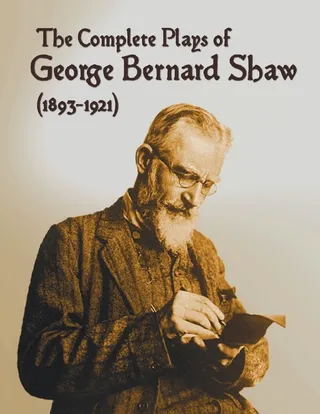
From 26 July 1856 to 2 November 1950, Irish playwright, critic, polemicist, and political activist George Bernard Shaw was alive. He preferred to be referred to simply as Bernard Shaw. From the 1880s until his death and even after, he had a significant impact on Western politics, theater, and society. He produced more than sixty plays, including classics like Saint Joan (1913), Pygmalion (1913), and Man and Superman (1902). (1923). Shaw became a well-known playwright during his time and was awarded the Nobel Prize in literature in 1925 for his works that combine historical allegory and contemporary satire. Before Shaw's first play, Arms and the Man, published in 1894, became a success in the public eye, years passed. He tried to infuse new realism into English-language drama, influenced by Henrik Ibsen. He had established himself as a reputable theater and music critic by the mid-1880s. After having a political awakening, he joined the gradualist Fabian Society and swiftly advanced to the position of principal pamphleteer. Before Shaw's first play, Arms and the Man, published in 1894, became a success in the public eye, years passed. He tried to infuse new realism into English-language drama, influenced by Henrik Ibsen.
More by Bernard Shaw


Why Readwise Books?
Readwise Books is an ebook & audiobook platform that automatically logs how much you and your friends read, making it fun and easy to read more. Learn more →