Josephus (Volume I)
Report an issue
Tell us what's wrong and we'll take a look.
Thanks – we got it. We'll review and follow up if needed.
Step into the tumultuous heart of first-century Judea, where empires clash and destinies are forged. Josephus (Volume I) by Flavius Josephus stands as one of the most vital ancient history texts, offering a vivid eyewitness account of the Jewish-Roman wars and the sweeping tides of rebellion and empire. Every page immerses readers in the drama of historical narratives that shaped the ancient world, from the fervour of Jewish rebellion accounts to the far-reaching chronicles of the Roman Empire. A masterful blend of rigorous observation and literary artistry, Josephus's writings bridge the worlds of classical historians and religious studies reference. His perspective not only illuminates the political and spiritual struggles of his era but also provides an indispensable first-century historical context for scholars of antiquity and ancient world enthusiasts alike. Revered for its depth and detail, this work remains a cornerstone for understanding the complexities and consequences of conflict in antiquity. Republished by Alpha Editions in a careful modern edition, this volume preserves the spirit of the original while making it effortless to enjoy today - a heritage title prepared for readers and collectors alike. Whether you are a casual reader drawn to the drama of the past or a collector seeking a cultural treasure, Josephus (Volume I) endures as an essential gateway to the enduring mysteries and truths of our shared history.
Flavius Josephus
Flavius Josephus was a Roman-Jewish historian and military officer who lived from around AD 37 to around 100. He was born in Jerusalem, then part of the Roman province of Judea, to a priestly father and a royal mother. He is best known for his novel The Jewish War. He initially fought against the Roman Empire as the general of the Jewish armies in Galilee during the First Jewish-Roman War, until surrendering in 67 AD to the Roman army led by military commander Vespasian following a six-week siege of Yodfat. According to Josephus, the Jewish messianic prophecies that sparked the First Jewish-Roman War mentioned Vespasian becoming Roman emperor. As a result, Vespasian opted to keep Josephus as a slave and interpreter. When Vespasian became Emperor in AD 69, he awarded Josephus his freedom, and he took the Emperor's surname of Flavius. Flavius Josephus surrendered completely to the Romans and was granted Roman citizenship. When Titus led the siege of Jerusalem in 70 AD, he became an advisor and companion of Vespasian's son Titus, working as his translator. After the siege failed to quell the Jewish insurrection, the city was pillaged, and Herod's Temple (the Second Temple) was looted and destroyed.
More by Flavius Josephus
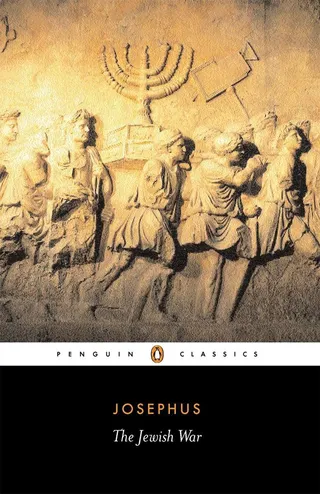
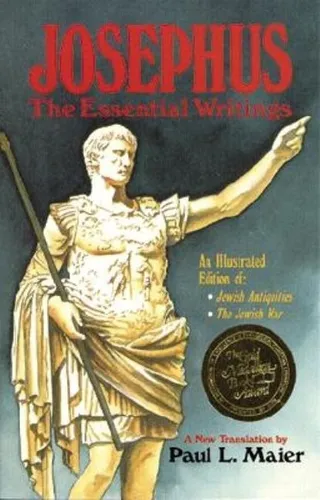
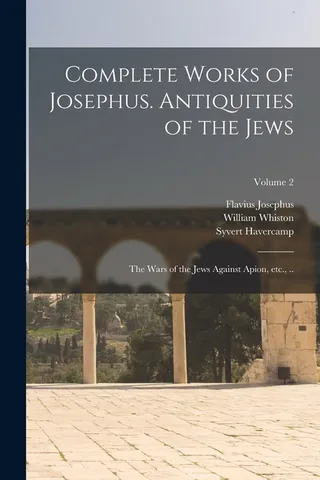
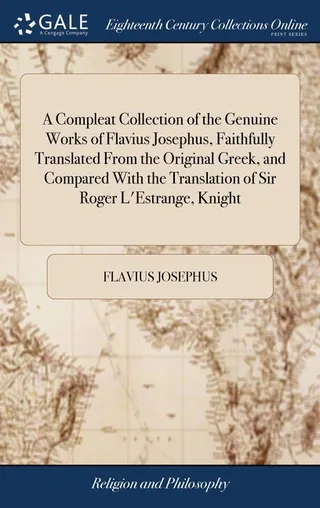
H St J Thackeray
Translated by
Henry St. John Thackeray (1869-1930) was Grinfield Lecturer on the Septuagint at Oxford. He was a noted expert on Josephus and the translator of the first English edition of The Grammar of New Testament Greek by Friedrich Blass. His work on the Septuagint includes Some Aspects of the Greek Old Testament and his contribution to Swete's An Introduction to the Old Testament in Greek.


Why Readwise Books?
Readwise Books is an ebook & audiobook platform that automatically logs how much you and your friends read, making it fun and easy to read more. Learn more →