The Outcry
Report an issue
Tell us what's wrong and we'll take a look.
Thanks – we got it. We'll review and follow up if needed.
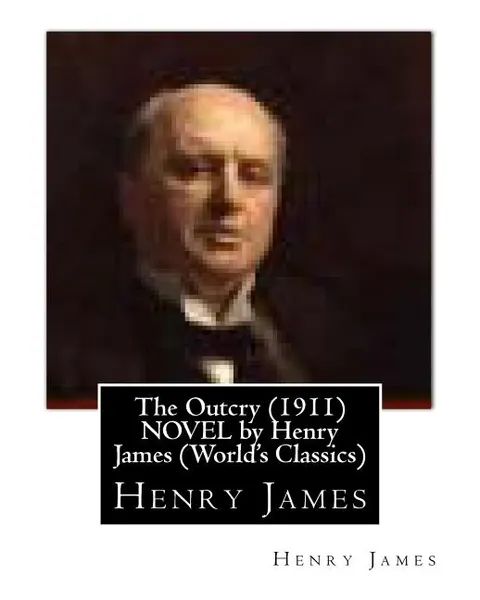
Henry James wrote a book titled The Outcry in 1911. It was once intended to be a play. His final work, The Outcry, was finished just before he passed away in 1916. The plot centers on affluent Americans purchasing priceless works of art from Britain. The widower Lord Theign intends to sell American millionaire Breckenridge Bender his exquisite painting Duchess of Waterbridge by Sir Joshua Reynolds to pay off the gambling debts of his daughter Kitty Imber. Young art critic Hugh Crimble opposes the sale, saying that Britain's priceless works of art should remain in the nation. Lady Grace, Theign's astute daughter, lends him encouragement. When word of the Reynolds' impending sale reaches the media, a patriotic uproar erupts, much to Bender's delight. Crimble, meantime, has discovered another artwork in Theign's collection that he believes to be a Mantovano rare. (James believed this artist to be a fabrication; nevertheless, it was later discovered that a little-known painter by that name actually existed.) Crimble's suspicion on the Mantovano eventually proves to be accurate. Theign decides not to sell the Reynolds to Bender and instead chooses to gift the Mantovano to the National Gallery. His friend Lady Sandgate joins forces with Theign by giving her family's Sir Thomas Lawrence artwork to the Gallery.
Henry James
American-born writer Henry James (1843-1916) authored 20 novels, 112 stories, 12 plays, and a number of literary criticisms. James was born in New York City into a wealthy family. In his youth, James traveled back and forth between Europe and America. He studied with tutors in Geneva, London, Paris, Bologna, and Bonn. At the age of nineteen, he briefly attended Harvard Law School, but he was more interested in literature than law. James published his first short story, "A Tragedy of Errors," two years later and then devoted himself entirely to literature. In the late 1860s and early 1870s, he was a contributor to the Nation and Atlantic Monthly. His first novel, Watch and Ward, first appeared serially in the Atlantic. After living in Paris, where he was a contributor to the New York Tribune, James moved to England. During his first years in Europe, James wrote novels that portrayed Americans living abroad. Between 1906 and 1910, he revised many of his tales and novels for the so-called New York edition of his complete works. Between 1913 and 1917, his three-volume autobiography-A Small Boy and Others, Notes of a Son and Brother, and The Middle Years (released posthumously)-was published. His last two novels, The Ivory Tower and The Sense of the Past, were left unfinished at his death. Among James's masterpieces are Daisy Miller, The Portrait of a Lady, The Bostonians, and The Wings of the Dove. In addition, James considered his 1903 work The Ambassadors his most "perfect" work of art.
More by Henry James



Why Readwise Books?
Readwise Books is an ebook & audiobook platform that automatically logs how much you and your friends read, making it fun and easy to read more. Learn more →