
Report an issue
Tell us what's wrong and we'll take a look.
Thanks – we got it. We'll review and follow up if needed.
But when, on the third day, we came on deck the news was written against the sky. Swinging from the funnels, sailors were painting out the scarlet-and-black colors of the Cunard line and substituting a mouse-like gray. Overnight we had passed into the hands of the admiralty, and the Lusitania had emerged a cruiser. That to possible German war-ships she might not disclose her position, she sent no wireless messages. But she could receive them; and at breakfast in the ship's newspaper appeared those she had overnight snatched from the air. Among them, without a scare-head, in the most modest of type, we read: "England and Germany have declared war." Seldom has news so momentous been conveyed so simply or, by the Englishmen on board, more calmly accepted. For any exhibition they gave of excitement or concern, the news the radio brought them might have been the result of a by-election.
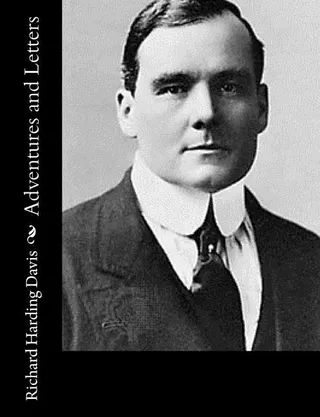
Richard Harding Davis
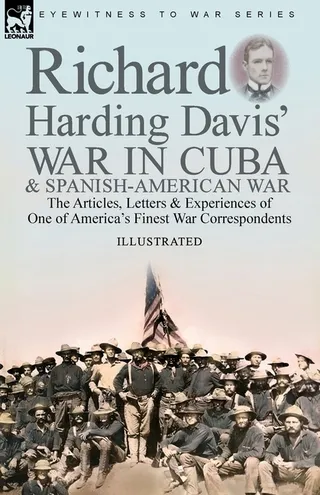
Richard Harding Davis was an American journalist, fiction and drama writer who is best remembered for becoming the first American war correspondent to cover the Spanish-American War, the Second Boer War, and WWI. His writing considerably helped Theodore Roosevelt's political career. He also played a significant effect in the evolution of American magazines. His impact extended to the world of fashion, and he is credited with popularizing the clean-shaven style among males at the start of the twentieth century. Davis was born April 18, 1864, in Philadelphia, Pennsylvania. His mother, Rebecca Harding Davis, was a well-known writer in her day. His father, Lemuel Clarke Davis, was a journalist who edited the Philadelphia Public Ledger. Davis attended Episcopal Academy when he was a young man. After an unsatisfactory year at Swarthmore College, Davis relocated to Lehigh University, where his uncle, H. Wilson Harding, was a professor. Davis' first book, a collection of short stories titled The Adventures of My Freshman (1884), was published while he was at Lehigh. Many of the tales had previously appeared in the student magazine, the Lehigh Burr. Davis attended Johns Hopkins University after transferring in 1885.
More by Richard Harding Davis



Why Readwise Books?
Readwise Books is an ebook & audiobook platform that automatically logs how much you and your friends read, making it fun and easy to read more. Learn more →