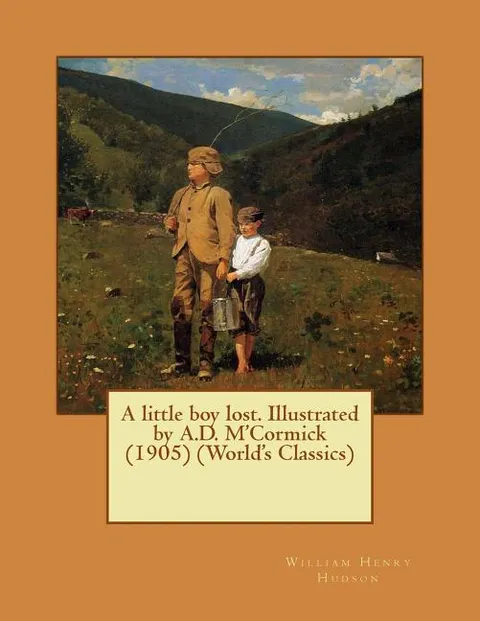
A little boy lost. Illustrated by A.D. M'Cormick (1905) (World's Classics)
Report an issue
Tell us what's wrong and we'll take a look.
Thanks – we got it. We'll review and follow up if needed.
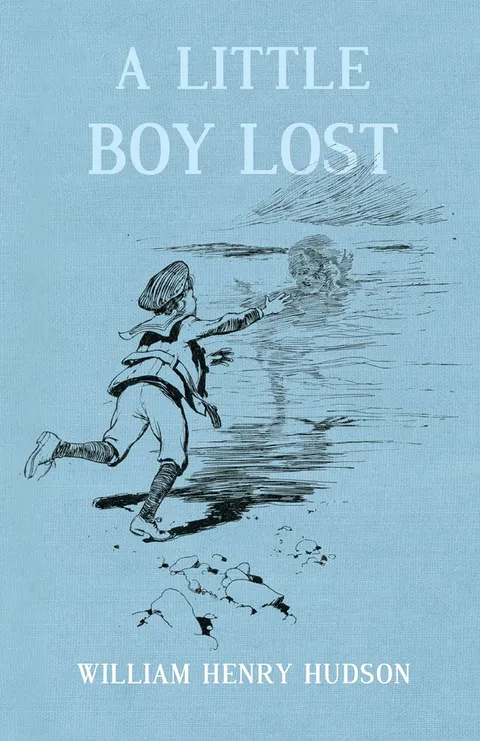
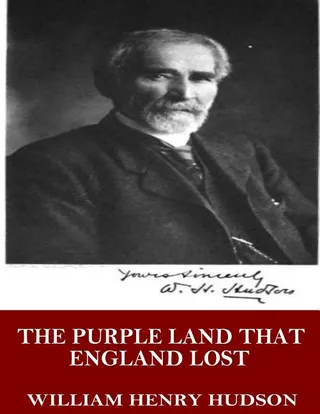
William Henry Hudson (4 August 1841 - 18 August 1922) was an author, naturalist, and ornithologist.Hudson was born in the borough of Quilmes, now Florencio Varela of the greater Buenos Aires, in Buenos Aires Province, Argentina. He was the son of Daniel Hudson and his wife Catherine née Kemble, U.S. settlers of English and Irish origin. He spent his youth studying the local flora and fauna and observing both natural and human dramas on what was then a lawless frontier, publishing his ornithological work in Proceedings of the Royal Zoological Society, initially in an English mingled with Spanish idioms. He had a special love of Patagonia.
William Henry Hudson
William Henry Hudson (4 August 1841 - 18 August 1922) was an Anglo-Argentine author, biologist, and ornithologist known in Argentina as Guillermo Enrique Hudson. Hudson was the son of English and Irish settlers Daniel Hudson and Catherine (née Kemble) in the United States. He was born and raised in the little estancia "25 Ombues" in what is now Ingeniero Allan, Florencio Varela, Argentina. In 1846, the family moved further south, to the environs of Chascoms, not far from the lake of the same name. Hudson spent his youth in this natural environment studying the local flora and fauna and observing both natural and human dramas on what was then a lawless frontier, while publishing his ornithological work in Proceedings of the Royal Zoological Society in an English mingled with Spanish idioms. He was particularly fond of Patagonia. Hudson moved to England in 1874, settling on St Luke's Road in Bayswater, where he would spend the rest of his life; in 1876, he married his landlady, former singer Emily Wingrave, in Kensington, London. She was born on 22 December 1829, one of John Hanmer Wingrave's daughters, and was eleven years older than Hudson.
More by William Henry Hudson


Why Readwise Books?
Readwise Books is an ebook & audiobook platform that automatically logs how much you and your friends read, making it fun and easy to read more. Learn more →