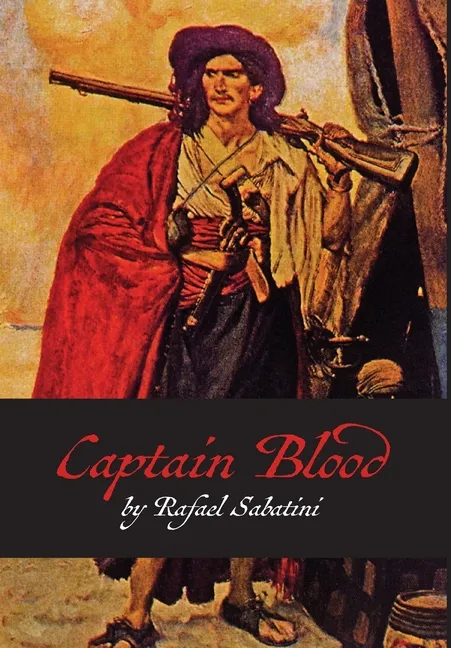
Captain Blood
Report an issue
Tell us what's wrong and we'll take a look.
Thanks – we got it. We'll review and follow up if needed.
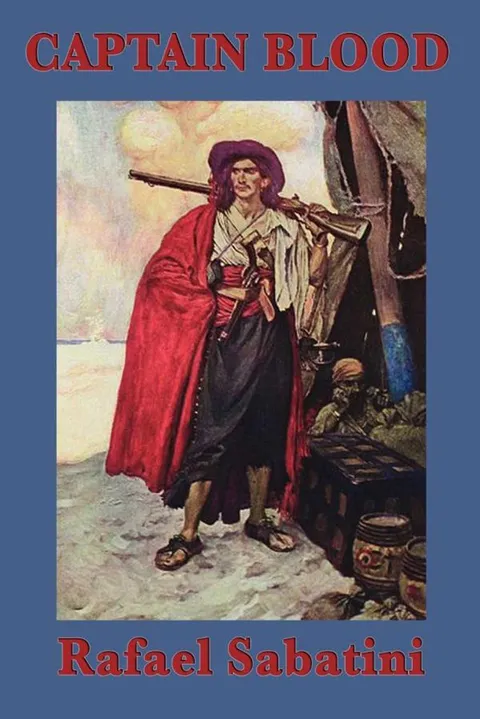
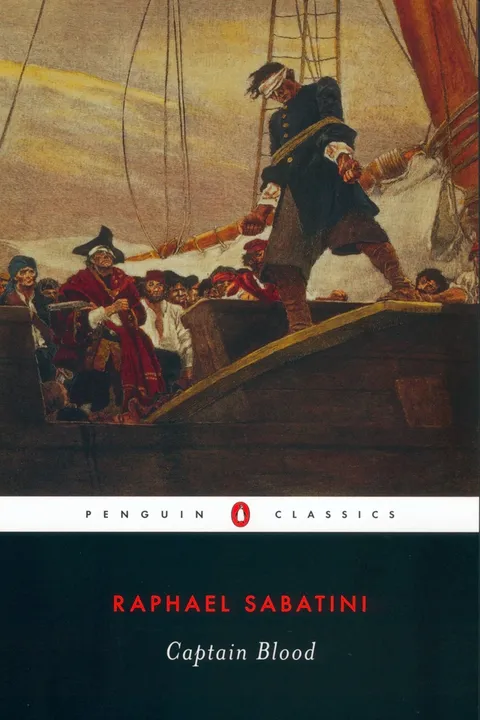
'Captain Blood' is one of the great adventure novels of the 20th century. Norman Mailer wrote of it; 'Glorious... I have never enjoyed a novel more than Captain Blood'.
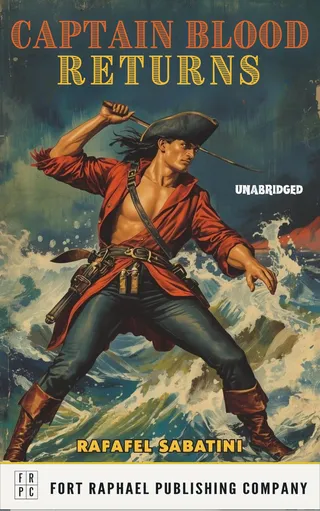
During the turbulent reign of James II, Peter Blood, gentleman surgeon and former soldier barely escapes the gallows after his arrest for treating a wounded 'Monmouth' rebel.
He is unfairly sentenced to ten years indentured slavery on a Barbados plantation by the notorious 'Hanging Judge' Judge Jeffreys. Blood escapes his captivity and then embarks on a career as a pirate before clearing his name and returning to England to be reunited with the love of his life, Arabella Bishop.
A rollicking tale of piracy on a grand scale, this is the classic novel of maritime adventure and romance.
Sabatini dramatically brings the past to life with great accuracy and his swashbuckling tale bristles with excitement as we follow the high seas adventures of his honourable hero, Captain Blood.
The book was the basis for the Hollywood film version starring Errol Flynn and Olivia de Haviland.
'Glorious... I have never enjoyed a novel more than Captain Blood' - Norman Mailer.
'Captain Blood is the very beau ideal of a pirate' - New York Times Book Review.
'Buckles never swashed more dashingly' - John Sutherland.
Captain Blood is marked by its exciting high seas adventures, exotic locations, historical elements, clever characters, romance, and its generous contribution of swashbuckling.
Rafael Sabatini
Known as "The Last of the Great Swashbucklers," Rafael Sabatini was an Italian-born author whose two lifelong passions-the demand for justice and the desire for tolerance-were common themes in his novels. His best-known works include The Sea-Hawk, Scaramouche, and Captain Blood, all of which were made into films. Sabatini was born in 1875 in the small town of Jesi, Italy. His English mother and Italian father were both well-known opera singers. They traveled extensively, so they sent Rafael to live in England until he was seven. Rafael then lived in Portugal and Milan with his parents until he was sent to school in Switzerland. He was a voracious reader and became proficient in four languages. At age seventeen, his father sent him to Liverpool to work as a translator. Sabatini began writing romances at the age of twenty, and his short fiction was published in a number of national magazines. In 1905, he quit his translator job to devote himself to writing full time, producing a book a year. That same year he married a daughter of a well-to-do Liverpool paper merchant, and four years later they had a son, Rafael-Angelo. Sabatini became a British citizen during World War I and worked in the British Intelligence as a translator. In the 1920s, with the publication of the international bestsellers Scaramouche and Captain Blood, he became an overnight success. In 1927, Rafael was devastated by the death of their only child, who was killed in an automobile accident. He fell into a deep depression, wrote very little, divorced his wife, and suffered financially from the Great Depression. However, in 1931 life improved when he moved outside London to Wye and remarried at age sixty. In his later years, he spent his time writing, fishing, and skiing in Switzerland, where he died in 1950.
More by Rafael Sabatini





Why Readwise Books?
Readwise Books is an ebook & audiobook platform that automatically logs how much you and your friends read, making it fun and easy to read more. Learn more →