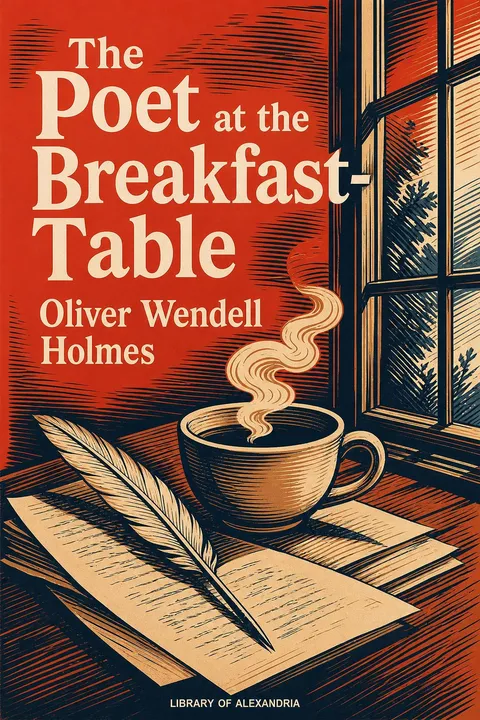
The Poet at the Breakfast-Table
Literary Essays and Philosophical Conversations on Science, Faith, and Everyday Life
Report an issue
Tell us what's wrong and we'll take a look.
Thanks – we got it. We'll review and follow up if needed.
A shared meal can open onto the largest questions of life. In these witty, searching conversations, everyday observations lead to reflections on belief, knowledge, and what it means to be human.
Oliver Wendell Holmes brings humor, verse, and philosophical curiosity to The Poet at the Breakfast-Table, the third work in his Breakfast-Table series. Within the familiar setting of a boarding house, conversation ranges far beyond the morning meal. Fictional voices provide a setting for literary reflection, social observation, and the exchange of competing ideas.
Writing as both a physician and a poet, Holmes draws on scientific inquiry without losing his interest in spiritual questions or the mysteries of individual experience. His prose moves easily between playful remarks and serious consideration of identity, mortality, and truth, while passages of poetry give the reflections another register. Rooted in nineteenth-century American intellectual life, the work remains engaging for its conversational energy and its willingness to let humor and uncertainty sit together.
What readers find inside:
- Conversation as discovery - Boarding-house exchanges turn ordinary encounters into opportunities for reflection.
- Science and belief - Questions of evidence and faith reveal the tensions and possibilities of different ways of knowing.
- Poetry within prose - Verse interludes deepen the book's reflections on life and human experience.
- Wit and observation - Holmes uses humor to examine social habits, personal convictions, and intellectual pretensions.
- American literary life - The work offers a window into the concerns and conversations of nineteenth-century America.
A rewarding choice for readers of classic American essays, lovers of literary conversation, and anyone drawn to the meeting of science and philosophy. Its pleasures lie as much in the movement of a curious mind as in the conclusions it reaches.
Take a place among the conversationalists and follow an ordinary morning into unexpected questions.
Oliver Wendell Holmes
Oliver Wendell Holmes Sr. (1809-1894) was a prominent American physician, poet, essayist, and professor, widely recognized for his contributions to literature and medicine. He was a key figure in the American literary scene of the 19th century and is remembered for his wit, wisdom, and innovative writing. Some of his notable works include: "The Last Leaf" (1831): A collection of poems that established him as a significant literary figure. "The Poet at the Breakfast Table" (1872): A series of reflections and conversations that showcase his wit and philosophical insights. "The Chambered Nautilus" (1858): A poem reflecting on the themes of growth and spirituality. Holmes was a leading figure in American literature and a prominent member of the Boston Brahmins, a group of influential and educated families in Boston. His work reflects a deep engagement with both contemporary social issues and timeless philosophical questions. Oliver Wendell Holmes Sr.'s blend of intellectualism and wit made him a beloved figure in American letters. His works continue to be appreciated for their insight into human nature, societal issues, and the philosophical musings of the 19th century. His influence extended beyond literature into the realms of medicine and education, leaving a lasting legacy in multiple fields.
More by Oliver Wendell Holmes







Why Readwise Books?
Readwise Books is an ebook & audiobook platform that automatically logs how much you and your friends read, making it fun and easy to read more. Learn more →