The Betrothed
Report an issue
Tell us what's wrong and we'll take a look.
Thanks – we got it. We'll review and follow up if needed.
The Tales of the Crusaders was determined upon as the title of the following series of the Novels, rather by the advice of the few friends whom, death has now rendered still fewer, than by the author's own taste. Not but that he saw plainly enough the interest which might be excited by the very name of the Crusaders, but he was conscious at the same time that that interest was of a character which it might be more easy to create than to satisfy, and that by the mention of so magnificent a subject each reader might be induced to call up to his imagination a sketch so extensive and so grand that it might not be in the power of the author to fill it up, who would thus stand in the predicament of the dwarf bringing with him a standard to measure his own stature, and showing himself, therefore, says Sterne, "a dwarf more ways than one."
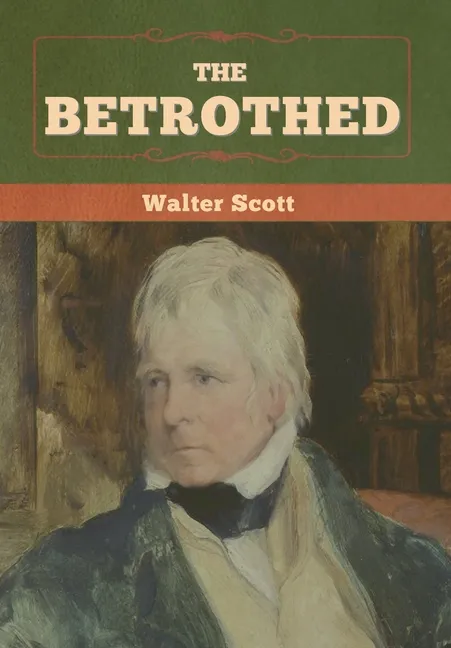
Walter Scott
Walter Scott was a Scottish novelist, poet, historian, and biographer widely recognized as a foundational figure in Scottish literature, Romantic historical fiction, and 19th-century literary history. Born in Edinburgh, Scotland, and later residing at Abbotsford in Selkirkshire, he played a major role in shaping modern perceptions of historical narrative fiction, national identity in literature, and European Romanticism. Scott is best known for developing the historical novel form, blending medieval history, folklore traditions, and dramatic storytelling into influential literary works that shaped both British and global fiction. His writings often explore themes of Scottish cultural heritage, feudal history, political conflict, and social transformation, making him central to studies of historical romance literature and Gothic-influenced narrative traditions. He was also deeply interested in antiquarian research, folklore preservation, and historical documentation, which influenced both his fiction and non-fiction works. Scott had five children, including Sophia, Walter, Anna, and Charles. His legacy continues to define historical fiction development, Romantic-era literature, and cultural nationalism in literary studies, establishing him as one of the most influential authors in Western literary history.
More by Walter Scott





Why Readwise Books?
Readwise Books is an ebook & audiobook platform that automatically logs how much you and your friends read, making it fun and easy to read more. Learn more →