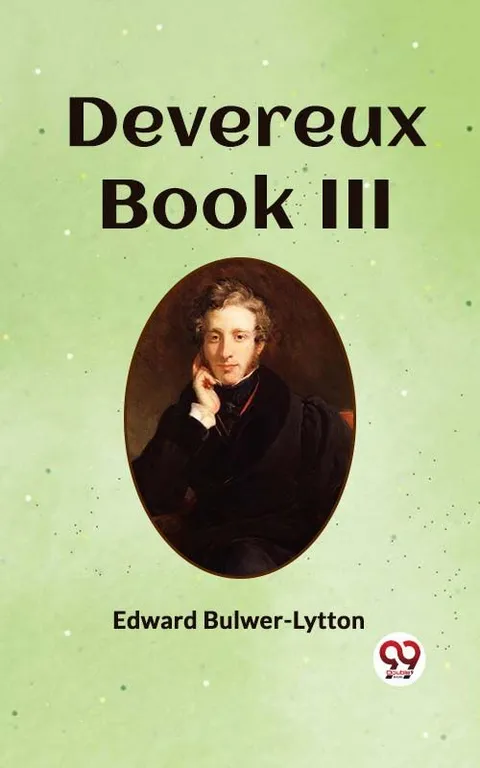
Devereux Book III
Report an issue
Tell us what's wrong and we'll take a look.
Thanks – we got it. We'll review and follow up if needed.
Edward Bulwer-Lytton "Devereux: Book III " is a charming ancient novel that transports readers to 17th-century England's political intrigue and romance. The narrative unit’s location against the backdrop of Queen Anne's stormy reign and chronicles the life of William Devereux, the formidable and mysterious protagonist. As a younger nobleman, Devereux should manipulate the problematic internet of courtly existence, ambition, and love. The novel digs into his relationships, goals, and the challenges he faces in a society ruled by using power conflicts and transferring alliances. Bulwer-Lytton brilliantly weaves together historic fiction, romance, and political drama, immersing readers in a wealthy tapestry of characters and activities. The novel's energy is its vivid description of historical locales, alongside the author's eager understanding of human man or woman. Bulwer-Lytton expertly depicts the surroundings of the duration, capturing the customs, traditions, and political intrigues of seventeenth-century England in minute detail. "Devereux: Book III" is an interesting advent to a bigger story, laying the groundwork for a massive ancient drama.
Edward Bulwer-Lytton
Edward George Earle Lytton Bulwer Lytton, 1st Baron Lytton, was an influential English writer and politician born on May 25, 1803, in London. A prolific author, he is best known for his novels, including The Last Days of Pompeii, Eugene Aram, and The Coming Race, which helped shape Victorian literature. His writing often explored themes of social issues, human nature, and the tension between reason and emotion. In addition to his literary career, Bulwer Lytton had a notable political life. He served as a Member of Parliament for the Whig Party from 1831 to 1841 and later as a Conservative from 1851 to 1866. He was also appointed to the House of Lords in 1866. Throughout his career, he was awarded the Chancellor's Gold Medal for his contributions to literature. He passed away on January 18, 1873, in Torquay at the age of 69. Bulwer Lytton's legacy endures through his literary works, which continue to influence modern storytelling, and his role in 19th-century politics.
More by Edward Bulwer-Lytton






Why Readwise Books?
Readwise Books is an ebook & audiobook platform that automatically logs how much you and your friends read, making it fun and easy to read more. Learn more →