My Ántonia
Report an issue
Tell us what's wrong and we'll take a look.
Thanks – we got it. We'll review and follow up if needed.
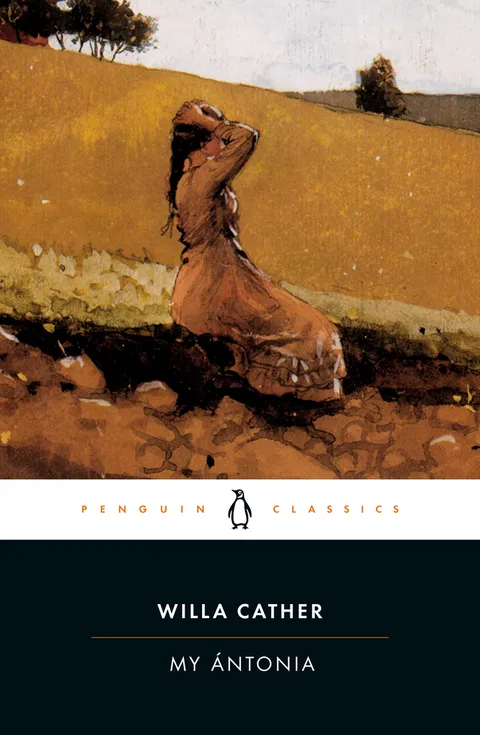
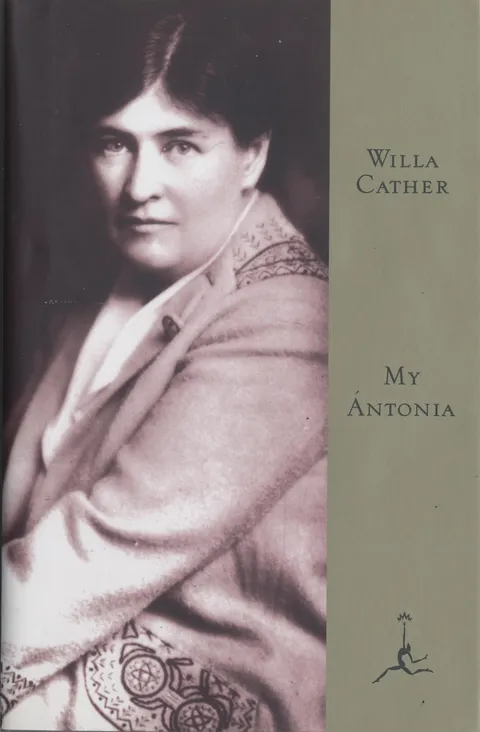
'The best thing I've done is My Antonia,' recalled Willa Cather. 'I feel I've made a contribution to American letters with that book.' Set against the vast Nebraska prairie, Cather's elegiac novel features one of the most winning heroines in American fiction—Antonia Shimerda—a young woman whose strength and passion epitomize the triumphant vitality of this country's pioneers.
'If, as is often said, every novelist is born to write one thing, then the one thing that Willa Cather was born to write was first fully realized in My Antonia,' observed Pulitzer Prize-winning author Wallace Stegner. 'The prose is. . .flexible, evocative; the structure at once free and intricately articulated; the characters stretch into symbolic suggestiveness as naturally as trees cast shadows in the long light of a prairie evening; the theme is the fully exposed, complexly understood theme of the American orphan or exile, struggling to find a place between an Old World left behind and a New World not yet created. . . . No writer ever posed that essential aspect of the American experience more warmly, with more nostalgic lyricism, or with a surer understanding of what it means.'
Willa Cather
Born in 1873 to a family who had farmed in Virginia for generations, Willa Cather moved to her father's new ranch in Nebraska when she was eight. The raw frontier territories and the pioneer life of the Old West were to awaken her imagination and furnish the atmosphere for much of her later work. After graduating from the University of Nebraska, Willa Cather became a teacher and a journalist. In 1912 she abandoned journalism to write full time. Her first novel was Alexander's Bridge (1912) though she had already published a volume of poems and another of short stories. Her vivid novels cover a wide range: there are impassioned and thoughtful explorations of the ancient worlds of the Americas in The Professor's House (1925) and Death Comes for the Archbishop (1927) as well as sympathetic portrayals of conflicting values, or of the demands of art. These, along with her evocations of the pioneering West, soon established her reputation as one of America's foremost writers. Willa Cather died in New York in 1947.
More by Willa Cather














Why Readwise Books?
Readwise Books is an ebook & audiobook platform that automatically logs how much you and your friends read, making it fun and easy to read more. Learn more →