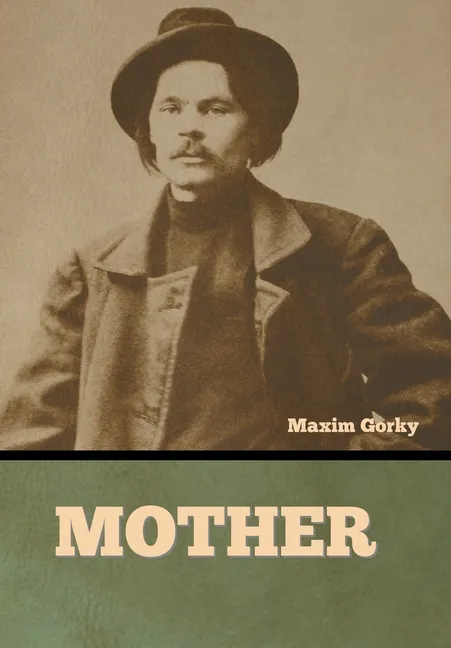
Mother
Report an issue
Tell us what's wrong and we'll take a look.
Thanks – we got it. We'll review and follow up if needed.
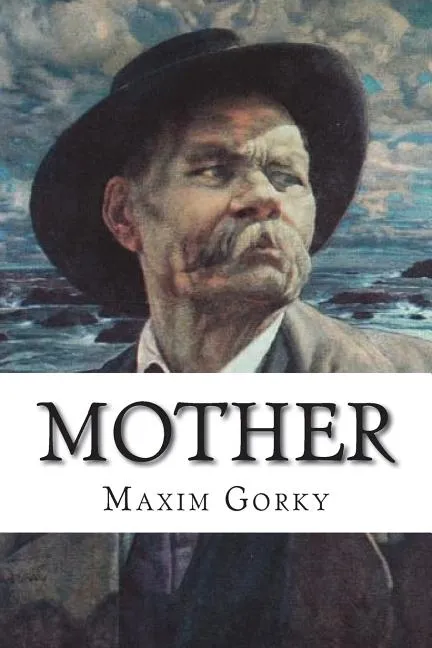
Mother is a novel written by Maxim Gorky in 1906 about revolutionary factory workers. It was first published, in English, in Appleton's Magazine in 1906, then in Russian in 1907.
The work was translated into many languages, and was made into a number of films. The German playwright Bertolt Brecht and his collaborators based their 1932 play The Mother on this novel. Modern critics consider it possibly the least successful of Gorky's novels, however, they call it Gorky's most important novel written before 1917.
Gorky wrote the novel on a trip to the United States in 1906. The political agenda behind the novel was clear. In 1905, after the defeat of Russia's first revolution, Gorky tried to raise the spirit of the proletarian movement by conveying the political agenda among the readers through his work. He was trying to raise spirit among the revolutionaries to battle the defeatist mood.
Gorky was personally connected to the novel as it is based on real life events, revolving around Anna Zalomova and her son Pyotr Zalomov. Gorky, being a distant relative of Anna Zalomova who visited Gorky's family when he was a child, had a deeper connection to the story. The event took place during a May Day demonstration in Sormovo in 1902. The shipbuilding town of Sormovo was near Gorky's native town, Nizhny Novgorod, where after the arrest of Piotr Zalomov by tsarist police, his mother, Anna Zalomova followed him into revolutionary activity.
The novel was first published by Appleton Magazine in the US and later by Ivan Ladyzhnikov Publishers in Germany. In Russia, it was published legally only after the February Revolution because of the Tsarist censorship.
Mother is the only big novel of Gorky on the Russian revolutionary movement; however, of all his novels, it is possibly the least successful. Nevertheless, it remains the best known work of Gorky among the author's other novels. Modern critics consider it Gorky's most important pre-revolutionary novel because of the vivid image of his "God-Builder" ideas.
After Gorky's return to the Soviet Union, the novel was declared by authorities as "the first work of Socialist realism", and Gorky as its "founder". Nevertheless, Gorky called Mother "one of his worst things".
Numerous artistic flaws of Mother and Gorky's other novels, written before 1910 have been widely described in reviews and critical essays by Korney Chukovsky, Andrei Sinyavsky, Ilya Serman, Marylin Minto and many others. As Minto notes, Nilovna's portrayal is very successful, but the other characters are one-dimensional. (wikipedia.org)
Maxim Gorky
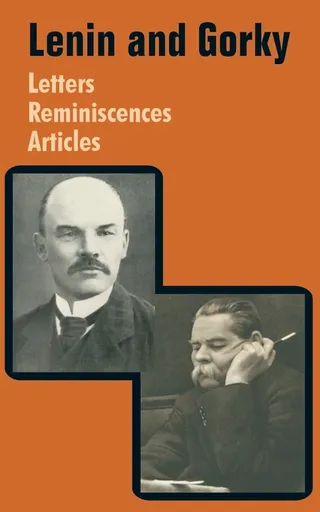
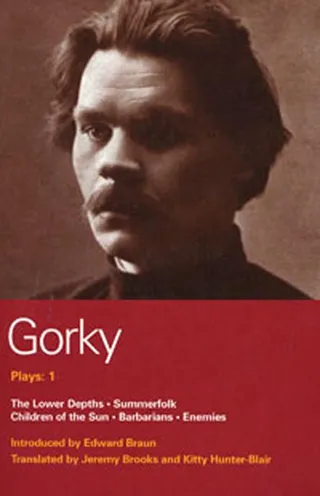
Alexei Maximovich Peshkov, better known as Maxim Gorky, was a renowned Russian and Soviet writer and a strong advocate for socialism. Born on March 28, 1868, in Nizhny Novgorod, Russia, he became one of the most prominent figures in Russian literature during the late 19th and early 20th centuries. Gorky's works often reflected his deep concern for the oppressed and his belief in social justice, which made him a leading figure in the socialist movement. His literary contributions include novels, plays, and short stories that critiqued social inequality and the human condition. Gorky was nominated five times for the Nobel Prize in Literature, a testament to his influence and the impact of his writing. His personal life included a marriage to Yekaterina Peshkova, from 1896 to 1903, though he later separated from her. Maxim Gorky spent his later years in Gorki-10, Russia, where he died on June 18, 1936, at the age of 68. His legacy as a writer and a proponent of socialist ideals continues to be a significant part of Russian literary history.
More by Maxim Gorky


Why Readwise Books?
Readwise Books is an ebook & audiobook platform that automatically logs how much you and your friends read, making it fun and easy to read more. Learn more →