
York Realist, The
Report an issue
Tell us what's wrong and we'll take a look.
Thanks – we got it. We'll review and follow up if needed.
Early 1960s, Yorkshire. Farm labourer George is cast in an amateur staging of the York Mystery Plays. His world is shaken when he falls for metropolitan assistant director John and the two men embark on a clandestine affair.
Peter Gill's influential play is not only a finely drawn love story; it is also a touching reflection on the rival forces of family, class, and the origins and ownership of art.
The York Realist was premiered by the English Touring Theatre at The Lowry, Salford Quays in November 2001; it moved to the Bristol Old Vic that same year and, in 2002, to the Royal Court Theatre, London. The play was revived by the Donmar Warehouse, London, in February 2018.
Winner of the London Critics' Circle Award for Best New Play.
'As a love story, The York Realist is riveting and heart-rendering... Gill is always terrifically perceptive about male tenderness. The personal and political are subtly united in a study of English masculinity, class and culture. Such outstanding work.' Independent on Sunday
'Sensationally fine and poignant.' Evening Standard
'It has the Lawrentian qualities of emotional intelligence, raw honesty and fascination with the intersection of class and sex... It is about the way the English, however hard they try, can never finally escape their origins. But, far from being emotionally conservative, it is adventurous, witty and fresh... The play comes like a rare blast of reality.' Guardian
Peter Gill
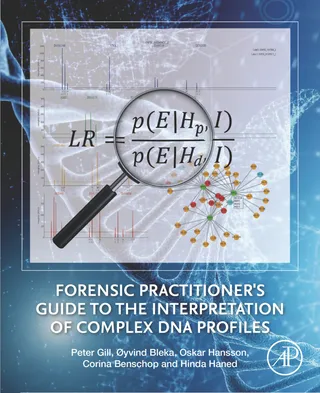
Dr. Peter Gill joined the Forensic Science Service (FSS) in 1982. He began his research into DNA in 1985, collaborating with Sir Alec Jeffreys of Leicester University. In the same year they published the first demonstration of the forensic application of DNA profiling. In 1987, Dr. Gill was given an award under the civil service inventor's scheme for discovery of the preferential sperm DNA extraction technique and the development of associated forensic tests. He was employed as Senior Principal Research Scientist at the Forensic Science Service (FSS). Currently, he hold concurrent positions at Oslo University Hospital and the University of Oslo where he is Professor of Forensic Genetics.
Romanovs
In 1993-4, Dr. Gill was responsible for leading the team which confirmed the identity of the remains of the Romanov family, murdered in 1918, and also the subsequent investigation which disproved the claim of Anna Anderson to be the Duchess Anastasia (using tissue preserved in a paraffin wax block for several decades). This was an early example of an historical mystery that was solved by the analysis of very degraded and aged material, and was one of the first demonstrations of low-template DNA analysis.
Low-template DNA
In relation to the above, Dr. Gill was responsible for developing a routine casework-based 'super-sensitive' method of DNA profiling that was capable of analysing DNA profiles from a handful of cells. This method was originally known as low-copy-number (LCN) DNA profiling. Now it is known as Low template DNA profiling. New statistical methods and thinking were also developed to facilitate the new methods.
National DNA database
Dr. Gill was responsible for leading the team that developed the first multiplex DNA systems to be used in a National DNA database anywhere in the world, and for the design of interpretation methods that are in current use (c.1995).
Court reporting: Dr. Gill has been involved with giving evidence in several high profile (controversial) cases - including the Doheny / Adams appeals, and the Omagh bombing trial in the UK.
Membership of scientific societies
Currently, Dr. Gill is a member of the European Network of Forensic Science Institutes and ex-chair of the 'methods, analysis and interpretation sub-section' He is chair of the International society for forensic genetics DNA commission on mixtures and has written a number of ISFG recommendations on low-template, mixture interpretation and evaluation of evidence that are highly cited. D. Gill is a member of the European DNA Profiling Group (EDNAP). He has published more than 200 papers in the international scientific literature which have been cited more than 20,000 times - many of these are collaborative papers under the auspices of ISFG, EDNAP and ENFSI. He is the recipient of the 2013 Scientific Prize of the International Society for Forensic Genetics.
Affiliations and Expertise
Forensic Genetics Research Group, Oslo University Hospital; Institute of Clinical Medicine, University of Oslo, Norwa
More by Peter Gill
























Why Readwise Books?
Readwise Books is an ebook & audiobook platform that automatically logs how much you and your friends read, making it fun and easy to read more. Learn more →