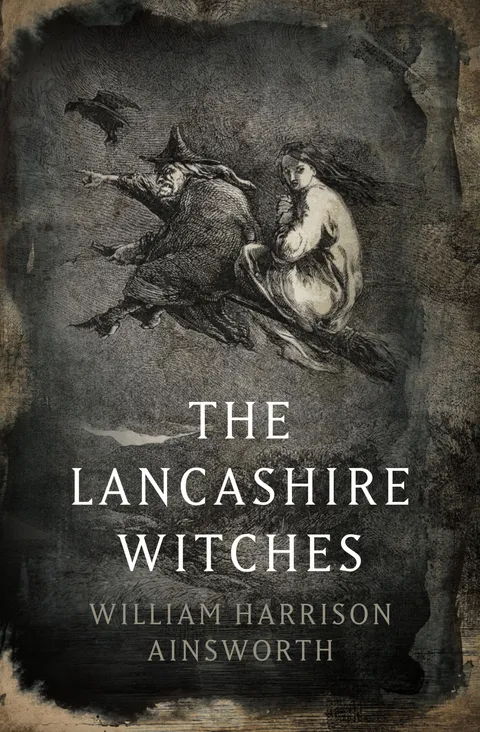
The Lancashire Witches
Report an issue
Tell us what's wrong and we'll take a look.
Thanks – we got it. We'll review and follow up if needed.
The classic Victorian novel of romance and an unholy feud reaching across generations, based on the Lancashire witch trials of 1612. Widely considered to be a masterpiece of nineteenth–century gothic literature, William Ainsworth's The Lancashire Witches begins in 1536 with a fateful confrontation atop the notorious Pendle Hill. Falsely accused of witchcraft and condemned to death, Nicholas Demdike sold his soul to Satan in exchange for his escape and revenge. But even as he sees his rival executed, Demdike's daughter is cursed to be a witch and a mother to witches. Many years later, Mother Demdike is feared throughout Lancashire for her dark powers. Her innocent granddaughter Alizon is determined to draw the Demdike family back to the church. But as Alizon falls in love and the secret of her birth is revealed, a conflict among rival witches leaves her fate hanging in the balance, until their cursed fate once again returns them all to Pendle Hill.
William Harrison Ainsworth
William Harrison Ainsworth (1805-1882) was an English novelist who is best known for his historical romances, many of which were set in the 17th century. Born in Manchester, Ainsworth was educated at the Manchester Grammar School and trained as a lawyer before turning to writing. He first gained recognition with his novel Rookwood (1834), which tells the story of a band of highwaymen in the 18th century. The novel was a commercial success and established Ainsworth as a leading figure in the historical fiction genre. Ainsworth went on to write several other historical romances, including Jack Sheppard (1839), Old Saint Paul's (1841), and The Lancashire Witches (1849). He also served as editor of Bentley's Miscellany, a popular literary magazine that featured the work of many notable writers of the day. In addition to his literary pursuits, Ainsworth was a collector of antiquities and played a prominent role in the establishment of the South Kensington Museum (now the Victoria and Albert Museum) in London. He was also a supporter of the arts and served as a director of the Royal Literary Fund. Ainsworth continued to write throughout his life and was a prolific author of novels, plays, and essays. He died in 1882 and is remembered as one of the most important writers of historical fiction in the Victorian era.
More by William Harrison Ainsworth






Why Readwise Books?
Readwise Books is an ebook & audiobook platform that automatically logs how much you and your friends read, making it fun and easy to read more. Learn more →