Report an issue
Tell us what's wrong and we'll take a look.
Thanks – we got it. We'll review and follow up if needed.
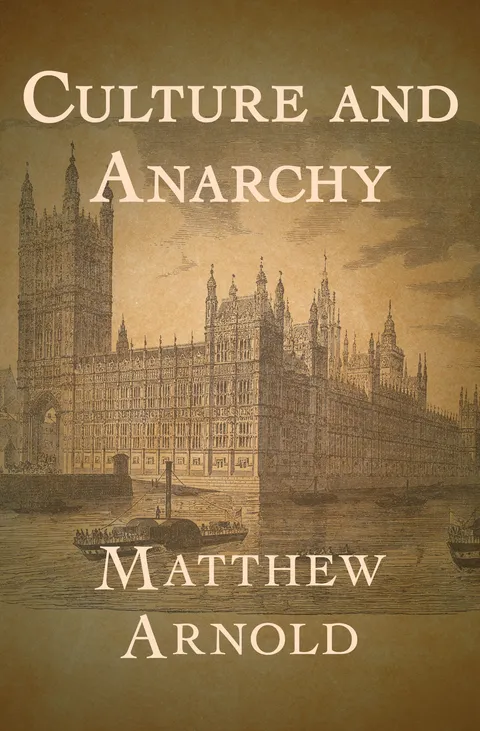
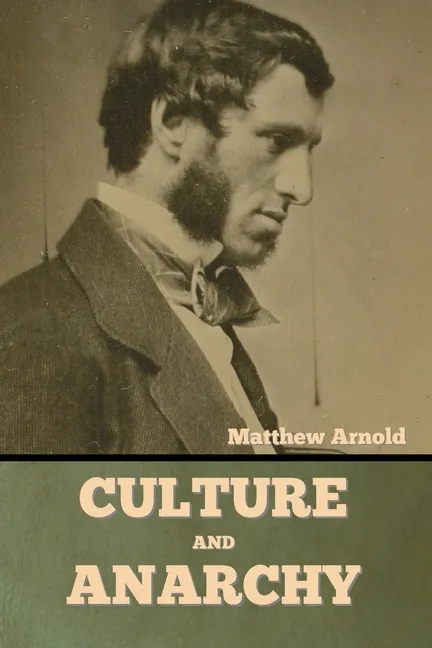
Culture and Anarchy is Matthew Arnold's classic argument about education, society, class, religion, politics, and the civilizing force of culture. Written in response to the social and political tensions of Victorian Britain, Arnold sets "culture" against what he saw as disorder, narrowness, and faction. By culture, he did not mean mere refinement or decorative learning, but the pursuit of "sweetness and light" the disciplined search for human perfection through knowledge, criticism, beauty, and right reason.
First published in book form in 1869, Culture and Anarchy became one of the defining works of Victorian cultural criticism. Arnold attacks complacent aristocrats, self-satisfied middle-class moralism, and working-class unrest with equal force, using his famous categories of "Barbarians," "Philistines," and "Populace" to describe the limits of each social group. His central question remains powerful: what kind of education, criticism, and moral imagination can keep a society from sinking into self-interest, noise, and disorder?
Readers interested in Victorian literature, cultural criticism, education, political thought, social criticism, and the history of the humanities will find Culture and Anarchy essential. It is a demanding, influential, and often provocative book: a defense of culture not as luxury, but as a public necessity.
Matthew Arnold
English poet and culture critic Matthew Arnold was born on December 24, 1822, and died on April 15, 1888. He also worked as a school inspector. He was born to Thomas Arnold, who was the famous teacher of Rugby School, and his siblings were Tom Arnold, who taught literature, and William Delafield Arnold, who wrote novels and ran the colonies. People have called Matthew Arnold a "sage writer," which means that his books chastise and teach the reader about modern social problems. He also worked as a school inspector for 35 years and backed the idea of secondary education being regulated by the state. Thomas Arnold and his wife Mary Penrose Arnold (1791-1873) had one son. He was born on December 24, 1822, in Laleham-On-Thames, Middlesex. Matthew asked John Keble to be his godfather. In 1828, Thomas Arnold was made Headmaster of Rugby School, which is where the family moved that same year. Arnold was taught in Laleham by his priest uncle John Buckland starting in 1831. In 1834, the Arnold family stayed at Fox How, a vacation home in the Lake District. Wordsworth lived nearby and was friendly with the people who lived there.
More by Matthew Arnold


Why Readwise Books?
Readwise Books is an ebook & audiobook platform that automatically logs how much you and your friends read, making it fun and easy to read more. Learn more →