Report an issue
Tell us what's wrong and we'll take a look.
Thanks – we got it. We'll review and follow up if needed.
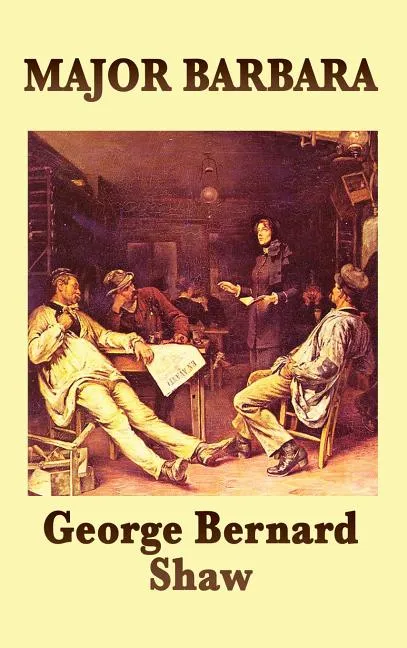
A sharply constructed social drama examining morality, power, and the uneasy relationship between charity and wealth.
In Major Barbara, George Bernard Shaw presents a compelling debate on the nature of social responsibility and the sources of moral authority. The play centres on Barbara Undershaft, a devoted officer in the Salvation Army, and her father Andrew Undershaft, a wealthy arms manufacturer whose fortune is built upon the machinery of war. Their encounter brings into focus a central question: whether moral ideals can remain intact when confronted with the realities of economic power.
Set against the contrasting environments of charitable work and industrial enterprise, the play unfolds through a series of dialogues that are both intellectually rigorous and dramatically engaging. Shaw challenges conventional distinctions between good and evil, suggesting that poverty itself may be a greater moral failing than the means by which wealth is acquired.
Written in the early twentieth century, Major Barbara reflects Shaw's broader engagement with social reform, class structure, and the role of institutions in shaping human life. Combining wit, paradox, and philosophical inquiry, the play remains a significant work within modern drama, offering a sustained examination of ethics, economics, and belief.
Bernard Shaw
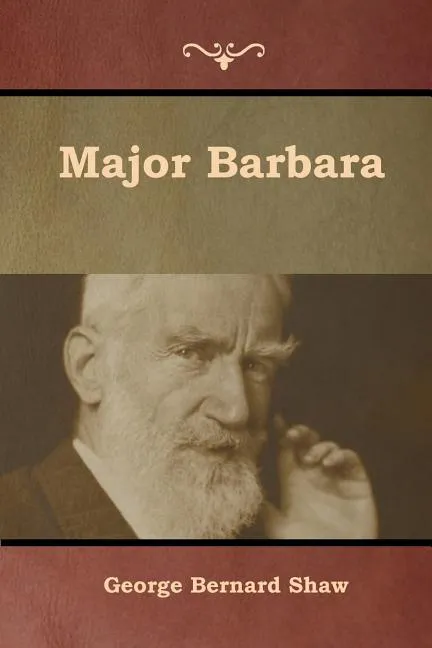
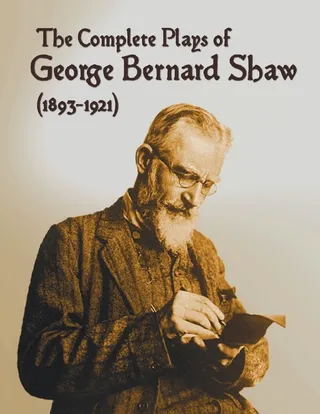
From 26 July 1856 to 2 November 1950, Irish playwright, critic, polemicist, and political activist George Bernard Shaw was alive. He preferred to be referred to simply as Bernard Shaw. From the 1880s until his death and even after, he had a significant impact on Western politics, theater, and society. He produced more than sixty plays, including classics like Saint Joan (1913), Pygmalion (1913), and Man and Superman (1902). (1923). Shaw became a well-known playwright during his time and was awarded the Nobel Prize in literature in 1925 for his works that combine historical allegory and contemporary satire. Before Shaw's first play, Arms and the Man, published in 1894, became a success in the public eye, years passed. He tried to infuse new realism into English-language drama, influenced by Henrik Ibsen. He had established himself as a reputable theater and music critic by the mid-1880s. After having a political awakening, he joined the gradualist Fabian Society and swiftly advanced to the position of principal pamphleteer. Before Shaw's first play, Arms and the Man, published in 1894, became a success in the public eye, years passed. He tried to infuse new realism into English-language drama, influenced by Henrik Ibsen.
More by Bernard Shaw









Why Readwise Books?
Readwise Books is an ebook & audiobook platform that automatically logs how much you and your friends read, making it fun and easy to read more. Learn more →