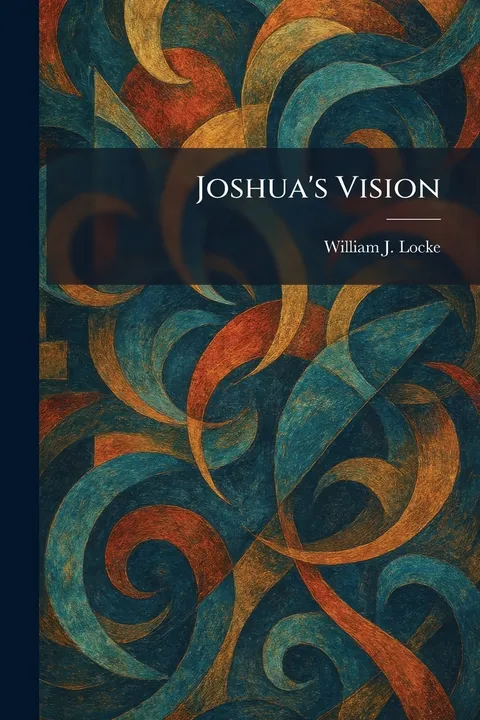
Joshua's Vision
Report an issue
Tell us what's wrong and we'll take a look.
Thanks – we got it. We'll review and follow up if needed.

"Joshua's Vision" is a poignant exploration of the human desire for creative fulfillment and the search for beauty amidst a life of industrial success. The novel follows Joshua Fendick, a wealthy, middle-aged businessman who has spent his years building a prosperous shoe manufacturing empire. Despite his significant financial achievements, Fendick feels a spiritual and aesthetic void, leading him to make the radical decision to abandon his commercial life in pursuit of a latent passion for sculpture.
As Fendick immerses himself in the bohemian world of art, he encounters a diverse cast of characters, including the enigmatic model Robina, who becomes the primary muse for his artistic and romantic aspirations. The narrative delves into the complexities of self-discovery, the technical and emotional challenges of mastering a new craft late in life, and the inherent tension between practical reality and aesthetic ideals. William J. Locke utilizes his signature wit and sentimental insight to examine whether a person can truly reinvent themselves or if the weight of their past remains an inescapable burden.
A thoughtful work of early twentieth-century fiction, "Joshua's Vision" remains a timeless meditation on the mid-life quest for meaning, the transformative power of art, and the sacrifices required to follow one's true calling.
This work has been selected by scholars as being culturally important, and is part of the knowledge base of civilization as we know it. This work was reproduced from the original artifact, and remains as true to the original work as possible. Therefore, you may see the original copyright references, library stamps (as most of these works have been housed in our most important libraries around the world), and other notations in the work.
This work is in the public domain in the United States of America, and possibly other nations. Within the United States, you may freely copy and distribute this work, as no entity (individual or corporate) has a copyright on the body of the work.
As a reproduction of a historical artifact, this work may contain missing or blurred pages, poor pictures, errant marks, etc. Scholars believe, and we concur, that this work is important enough to be preserved, reproduced, and made generally available to the public. We appreciate your support of the preservation process, and thank you for being an important part of keeping this knowledge alive and relevant.
William J Locke
William John Locke was a British novelist, dramatist, and playwright, celebrated for his short stories and contributions to literature. Born on March 20, 1863, in Saint George, United Kingdom, he was the son of John Locke and Sarah Elizabeth Locke. He achieved recognition through his works that often explored the complexities of human emotions and relationships. Locke's writing was marked by a focus on the internal struggles of his characters, often set against the backdrop of societal expectations. In 1911, he married Aimee Maxwell, with whom he spent the remainder of his life. Locke's works gained popularity during his lifetime, and he was particularly known for his play "The Morals of Marcus Ordeyne," which reflected his keen insights into the human condition. His literary career was distinguished by a blend of both prose and drama, and his ability to delve into the psychological and emotional aspects of his characters set his work apart. Locke passed away on May 15, 1930, in Paris, France, leaving behind a legacy of thoughtful and compelling writing that continues to be appreciated by readers and scholars.
More by William J Locke






Why Readwise Books?
Readwise Books is an ebook & audiobook platform that automatically logs how much you and your friends read, making it fun and easy to read more. Learn more →