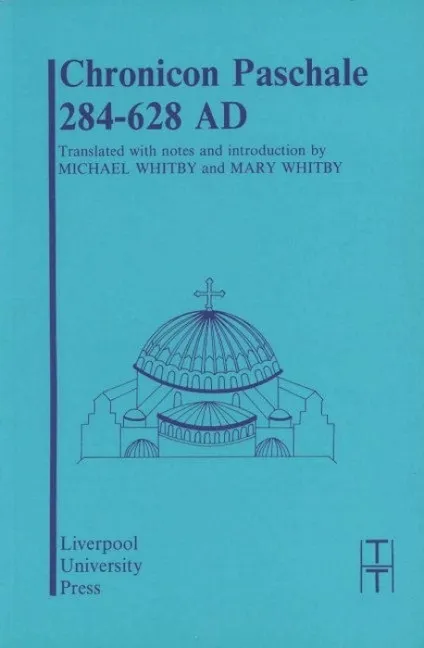
Chronicon Paschale, A.D. 284-628
Report an issue
Tell us what's wrong and we'll take a look.
Thanks – we got it. We'll review and follow up if needed.
The Chronicon Paschale is one of the major constituents of the Byzantine chronographic tradition covering the late-antique period. It was composed at Constantinople, c. 630, by one of the clergy of St. Sophia. Its importance is twofold: for the fifth and sixth centuries, it provides a major supplement to the Chronicle of Malalas, a sixth-century history that survives only in abbreviated form; for the seventh century, it contains substantial independent evidence (including some transcribed official letters) relating to the empire's internal and external troubles--the riots, plots, and massacres of Phocas's reign; the financial difficulties; the Avar siege of Constantinople (626); and the triumph over the Persians (628) under Heraclius.
Michael Whitby
Translated by
MICHAEL WHITBY is Professor of Classics and Ancient History at the University of Warwick. He is the co-editor of Volume XIV of The Cambridge Ancient History (2001) and author of Rome at War, AD 293-696 (2002) as well as several articles on late Roman warfare, and has made several television appearances talking about ancient warfare from the Graeco-Persian Wars to the collapse of the Roman Empire.
Mary Whitby
Translated by
Mary Whitby is Instructor in Greek and Latin in the University of Oxford and Lecturer in Ancient Greek at Merton College, Oxford. She is a General Editor of the Translated Texts for Historians series.


Why Readwise Books?
Readwise Books is an ebook & audiobook platform that automatically logs how much you and your friends read, making it fun and easy to read more. Learn more →