Report an issue
Tell us what's wrong and we'll take a look.
Thanks – we got it. We'll review and follow up if needed.
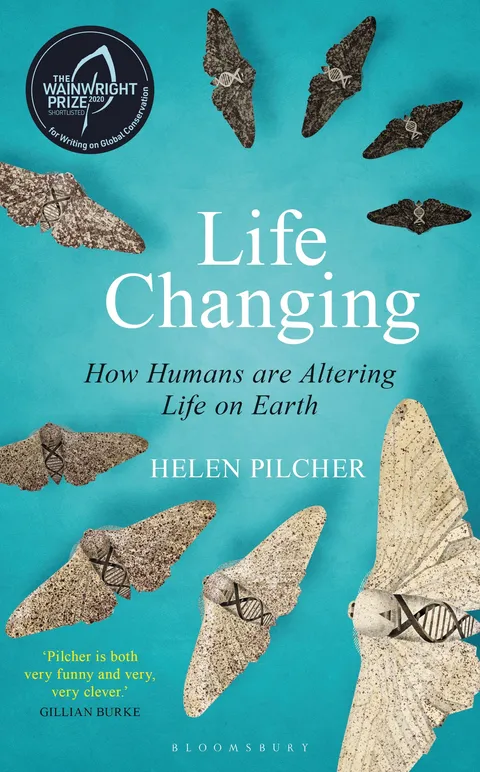
SHORTLISTED FOR THE WAINWRIGHT PRIZE FOR WRITING ON GLOBAL CONSERVATION
'Pilcher is both very funny and very, very clever.' Gillian Burke
'Richly entertaining throughout.' Sunday Times
For the last three billion years or so, life on Earth was shaped by natural forces. Evolution tended to happen slowly, with species crafted across millennia. Then, a few hundred thousand years ago, along came a bolshie, big-brained, bipedal primate we now call Homo sapiens, and with that, the Earth's natural history came to an abrupt end. We are now living through the post-natural phase, where humans have become the leading force shaping evolution.
This thought-provoking book considers the many ways that we've altered the DNA of living things and changed the fate of life on earth. We have carved chihuahuas from wolves and fancy chickens from jungle fowl. We've added spider genes to goats and coral genes to tropical fish. It's possible to buy genetically-modified pets, eat genetically-modified fish and watch cloned ponies thunder up and down the polo field.
Now, as our global dominance grows, our influence extends far beyond these species. As we warm our world and radically reshape the biosphere, we affect the evolution of all living things, near and far, from the emergence of novel hybrids such as the pizzly bear, to the entirely new strains of animals and plants that are evolving at breakneck speed to cope with their altered environment.
In Life Changing, Helen introduces us to these post-natural creations and talks to the scientists who create, study and tend to them. At a time when the future of so many species is uncertain, we meet some of the conservationists seeking to steer evolution onto firmer footings with novel methods like the 'spermcopter', coral IVF and plans to release wild elephants into Denmark. Helen explores the changing relationship between humans and the natural world, and reveals how, with evidence-based thinking, humans can help life change for the better.
Helen Pilcher
Dr. Helen Pilcher is an experienced science writer and a former scientist. She has a PhD and an MSc in neuroscience from London's Institute of Psychiatry, and an undergraduate degree in psychology. Previously a reporter for the journal Nature, her work has appeared in many outlets including New Scientist, Nature, Science Focus, BBC Wildlife, the Big Issue, and BBC Online. Unusually for a science writer, Pilcher also used to work as a stand-up comedian. She regularly gives talks at school events and festivals, and can often be heard chatting on podcasts and the radio. She teaches science writing at Leicester University and runs workshops on science communication for various colleges and companies. Pilcher lives in rural Warwickshire with her family. She has written two books for Bloomsbury's specialist science imprint Sigma; This Book May Cause Side Effects is her first trade book.
More by Helen Pilcher









Why Readwise Books?
Readwise Books is an ebook & audiobook platform that automatically logs how much you and your friends read, making it fun and easy to read more. Learn more →