Report an issue
Tell us what's wrong and we'll take a look.
Thanks – we got it. We'll review and follow up if needed.
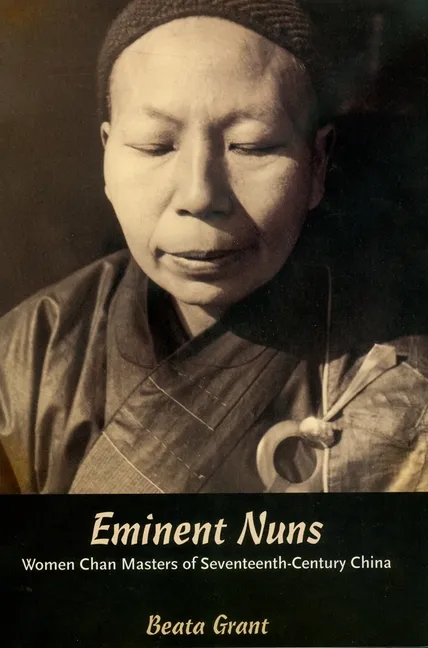
The seventeenth century is generally acknowledged as one of the most politically tumultuous but culturally creative periods of late imperial Chinese history. Scholars have noted the profound effect on, and literary responses to, the fall of the Ming on the male literati elite. Also of great interest is the remarkable emergence beginning in the late Ming of educated women as readers and, more importantly, writers. Only recently beginning to be explored, however, are such seventeenth-century religious phenomena as "the reinvention" of Chan Buddhism--a concerted effort to revive what were believed to be the traditional teachings, texts, and practices of "classical" Chan. And, until now, the role played by women in these religious developments has hardly been noted at all.
Eminent Nuns is an innovative interdisciplinary work that brings together several of these important seventeenth-century trends. Although Buddhist nuns have been a continuous presence in Chinese culture since early medieval times and the subject of numerous scholarly studies, this book is one of the first not only to provide a detailed view of their activities at one particular moment in time, but also to be based largely on the writings and self-representations of Buddhist nuns themselves. This perspective is made possible by the preservation of collections of "discourse records" (yulu) of seven officially designated female Chan masters in a seventeenth-century printing of the Chinese Buddhist Canon rarely used in English-language scholarship. The collections contain records of religious sermons and exchanges, letters, prose pieces, and poems, as well as biographical and autobiographical accounts of various kinds. Supplemental sources by Chan monks and male literati from the same region and period make a detailed re-creation of the lives of these eminent nuns possible.
Beata Grant brings to her study background in Chinese literature, Chinese Buddhism, and Chinese women's studies. She is able to place the seven women, all of whom were active in Jiangnan, in their historical, religious, and cultural contexts, while allowing them, through her skillful translations, to speak in their own voices. Together these women offer an important, but until now virtually unexplored, perspective on seventeenth-century China, the history of female monasticism in China, and the contributionof Buddhist nuns to the history of Chinese women's writing.
Beata Grant
Beata Grant is professor of Chinese language and literature at Washington University. She is the author of Eminent Nuns: Female Buddhist Masters of Seventeenth-Century China (University of Hawai'i Press, 2009); coauthor of The Red Brush: Writing Women of Imperial China (Harvard East Asia Center, 2004); and cotranslator of Escape from Blood Pond Hell: The Tales of Mulian and Woman Huang (University of Washington Press, 2011).
More by Beata Grant


Why Readwise Books?
Readwise Books is an ebook & audiobook platform that automatically logs how much you and your friends read, making it fun and easy to read more. Learn more →