Report an issue
Tell us what's wrong and we'll take a look.
Thanks – we got it. We'll review and follow up if needed.
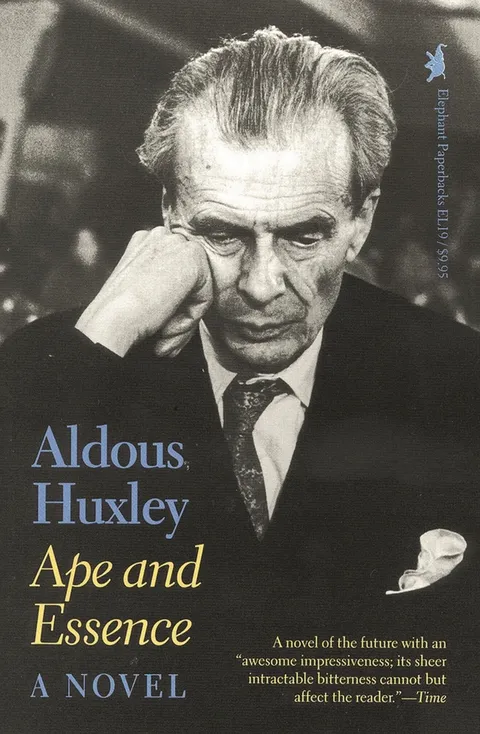
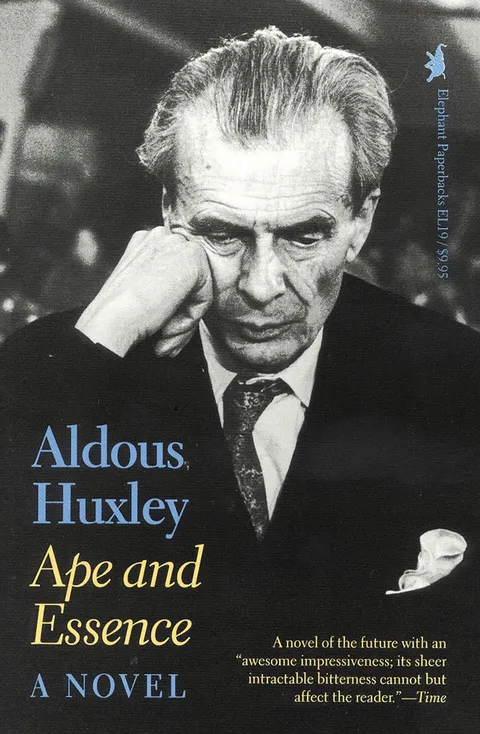
When Aldous Huxley's Brave New World first appeared in 1932, it presented in terms of purest fantasy a society bent on self-destruction. Few of its outraged critics anticipated the onset of another world war with its Holocaust and atomic ruin. In 1948, seeing that the probable shape of his anti-utopia had been altered inevitably by the facts of history, Huxley wrote Ape and Essence. In this savage novel, using the form of a film scenario, he transports us to the year 2108. The setting is Los Angeles where a "rediscovery expedition" from New Zealand is trying to make sense of what is left. From chief botanist Alfred Poole we learn, to our dismay, about the twenty-second-century way of life. "It was inevitable that Mr. Huxley should have written this book: one could almost have seen it since Hiroshima is the necessary sequel to Brave New World."-Alfred Kazin. "The book has a certain awesome impressiveness; its sheer intractable bitterness cannot but affect the reader."-Time.
Aldous Huxley
Aldous Huxley (1894–1963) is the author of the classic novels Brave New World, Island, Eyeless in Gaza, and The Genius and the Goddess, as well as such critically acclaimed nonfiction works as The Perennial Philosophy and The Doors of Perception. Born in Surrey, England, and educated at Oxford, he died in Los Angeles, California.
More by Aldous Huxley








Why Readwise Books?
Readwise Books is an ebook & audiobook platform that automatically logs how much you and your friends read, making it fun and easy to read more. Learn more →