The Fox
Report an issue
Tell us what's wrong and we'll take a look.
Thanks – we got it. We'll review and follow up if needed.
David Herbert Lawrence (11 September 1885 - 2 March 1930) was an English writer and poet. His collected works represent, among other things, an extended reflection upon the dehumanising effects of modernity and industrialisation. Some of the issues Lawrence explores are sexuality, emotional health, vitality, spontaneity, and instinct.
Lawrence's opinions earned him many enemies and he endured official persecution, censorship, and misrepresentation of his creative work throughout the second half of his life, much of which he spent in a voluntary exile he called his "savage pilgrimage". At the time of his death, his public reputation was that of a pornographer who had wasted his considerable talents. E. M. Forster, in an obituary notice, challenged this widely held view, describing him as "the greatest imaginative novelist of our generation." The philosopher Bertrand Russell characterised Lawrence as a proto-German Fascist. Later, the literary critic F. R. Leavis championed both his artistic integrity and his moral seriousness.
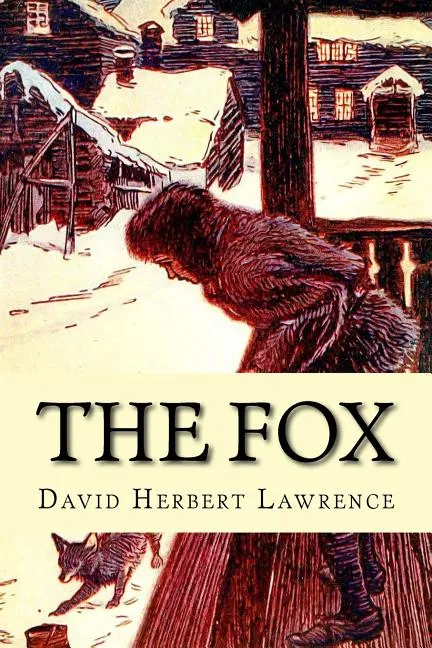
The Fox is a novella by D. H. Lawrence which first appeared in The Dial in 1922. Set in Berkshire, England, during World War I, The Fox, like many of D. H. Lawrence's other major works, deals with the psychological relationships of three protagonists in a triangle of love and hatred. Without the help of any male laborers, Nellie March and Jill Banford struggle to maintain a marginal livelihood at the Bailey Farm. A fox has raged through the poultry, and although the women--particularly the more masculine Nellie--have tried to shoot the intruder, he seems always to elude traps or gunshot.
Banford and March live on a farm together because it does not look like they will marry. Although they are only in their late twenties, in that era women who were still single at their age were generally considered to have forgone the prospect of marriage. Banford is thin and frail, in contrast to her companion who is physically masculine. However particular emphasis is given to March's face, which is feminine and expressive. The women are depicted as fearful of femininity and fertility. For example, they sell a heifer before it calves.
The fox becomes a hindrance to Banford and March, but March finds she cannot hunt it, and rather, she becomes entranced by it. Shortly after this, Henry, a young man, comes to stay with the women, and a link is established between the fox and Henry.
This intriguing novella explores gender roles, sexuality, femininity, and the pity of war, as do two other Lawrence novellas written at the same time, The Ladybird and The Captain's Doll. (wikipedia.org)
D H Lawrence
David Herbert Lawrence was born on 11th September 1881 in Eastwood, a small mining village in Nottinghamshire, in the English Midlands. Despite ill health as a child and a comparatively disadvantageous position in society, he became a teacher in 1908, and took up a post in a school in Croydon, south of London. His first novel, The White Peacock, was published in 1911, and from then until his death he wrote feverishly, producing poetry, essays, plays, travel books, short stories, and eleven more novels, including The Rainbow, Women in Love and Lady Chatterley’s Lover. Lawrence travelled widely, settling for periods in Italy, New Mexico and Mexico. He married Frieda Weekley in 1914 and died of tuberculosis in 1930.
More by D H Lawrence







Why Readwise Books?
Readwise Books is an ebook & audiobook platform that automatically logs how much you and your friends read, making it fun and easy to read more. Learn more →