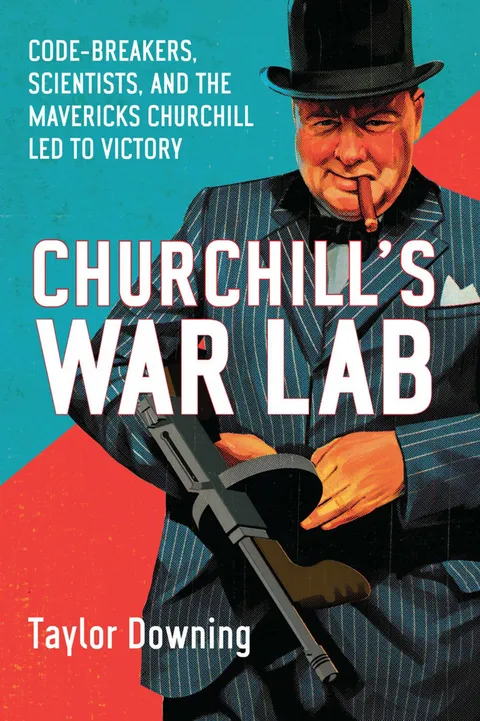
Churchill's War Lab
Code Breakers, Scientists, and the Mavericks Churchill Led to Victory
Report an issue
Tell us what's wrong and we'll take a look.
Thanks – we got it. We'll review and follow up if needed.
This WWII biography of Britain's legendary Prime Minister examines his critical role in the military innovations that led to victory. Winston Churchill's vital leadership in the allied victory of World War II is undisputed. As a patriot, statesman, and orator, he successfully galvanized a beleaguered nation and helped coordinated a vast international bulwark against fascism. Yet, of his many unique qualities, Churchill's enduring legacy is attributable at least in equal part to his unshakeable fascination for the science of war. Churchill's War Lab reveals how Churchill's passion for military history, his inimitable leadership style, and his dedicated support of radical ideas would lead to new technologies and tactics that would enable an allied victory. No war generated more incredible theories, technical advances, and scientific leaps. From the development of radar and the decoding brilliance of Bletchley Park to the study of the D-Day beaches and the use of bouncing bombs, Churchill's War Lab is an enlightening and exciting new take on Churchill as a complex, powerful, and inventive war leader.
Taylor Downing
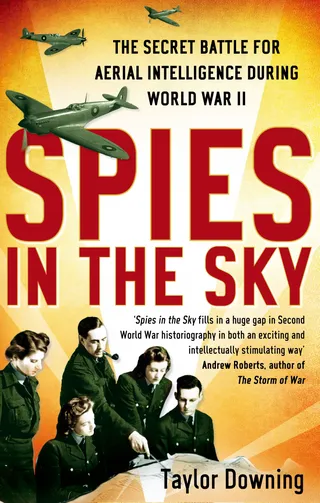
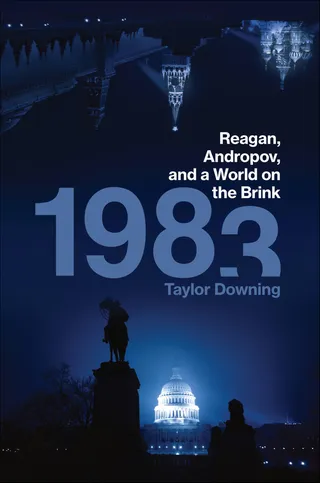
TAYLOR DOWNING is a television producer and writer. As managing director of Flashback Television he has produced more than 200 documentaries including many award winning history programmes. In 2008 he won the Grierson Award for Best Historical Documentary for 1983 – The Brink of Apocalypse (Channel 4 and Discovery US co-pro). He won the first ever BFI Award for Archival Achievement in 1985. Taylor is author of Churchill's War Lab (Little, Brown 2010) and Spies in the Sky (Little, Brown 2011), Cold War (1996, with Jeremy Isaacs) and Olympia (a BFI Film Classic). He regularly writes on Television History for History Today magazine and has lectured on Television History at the universities of Cambridge, Lincoln and Queen's, Belfast in the last two years. Taylor began his career at the Imperial War Museum in 1976 soon after the making of The World at War and then at Thames Television in the history unit that was set up following the huge success of The World at War.
More by Taylor Downing


Why Readwise Books?
Readwise Books is an ebook & audiobook platform that automatically logs how much you and your friends read, making it fun and easy to read more. Learn more →