Report an issue
Tell us what's wrong and we'll take a look.
Thanks – we got it. We'll review and follow up if needed.
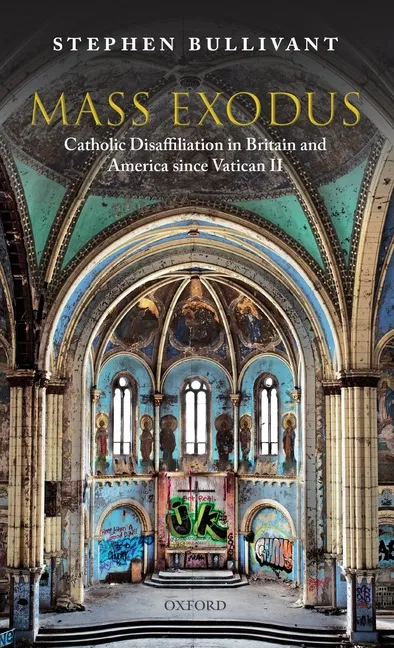
In 1962, Pope John XXIII opened the Second Vatican Council with the prophecy that 'a new day is dawning on the Church, bathing her in radiant splendour'. Desiring 'to impart an ever increasing vigour to the Christian life of the faithful', the Council Fathers devoted particular attention to the laity, and set in motion a series of sweeping reforms. The most significant of these centred on refashioning the Church's liturgy--'the source and summit of the Christian life'--in order to make 'it pastorally efficacious to the fullest degree'.
Over fifty years on, however, the statistics speak for themselves. In America, only 15% of cradle Catholics say that they attend Mass on a weekly basis; meanwhile, 35% no longer even tick the 'Catholic box' on surveys. In Britain, the signs are direr still. Catholicism is not the only Christian group to have suffered serious declines since the 1960s. If anything Catholics exhibit higher church attendance, and better retention, than most Protestant churches do. If Vatican II is not the cause of Catholicism's crisis, might it instead be the secret to its comparative success?
Mass Exodus is the first serious historical and sociological study of Catholic lapsation and disaffiliation. Drawing on a wide range of theological, historical, and sociological sources, Stephen Bullivant offers a comparative study of secularization across two famously contrasting religious cultures: Britain and the USA.
Stephen Bullivant
Stephen Bullivant holds professorial positions at St Mary's University, London, and the University of Notre Dame, Sydney. He has doctorates in theology (Oxford, 2009) and sociology (Warwick, 2019). His studies of contemporary nonreligiosity have received wide international coverage, including from the BBC, New York Times, Economist, Financial Times, and Der Spiegel.
More by Stephen Bullivant














Why Readwise Books?
Readwise Books is an ebook & audiobook platform that automatically logs how much you and your friends read, making it fun and easy to read more. Learn more →