
Walking
Report an issue
Tell us what's wrong and we'll take a look.
Thanks – we got it. We'll review and follow up if needed.

"For I believe that climate does thus react on man -- as there is something in the mountain air that feeds the spirit and inspires."
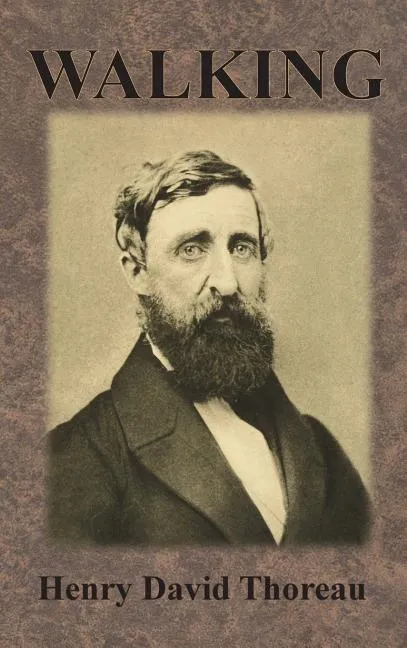
Henry David Thoreau's Walking began as a lecture in 1851 and ultimately appeared in The Atlantic Monthly in 1862, shortly after the author's death. The impassioned essay, which praises the merits of time spent in nature, has become one of the most influential works of the modern environmentalist movement. Thoreau's view of walking in nature as a self-reflective activity invites readers to embark on their own ramble in order to gain a "wild and dusky" self-knowledge unattainable elsewhere.
Americans felt the pressures of a changing world even in the relatively slow-paced 1800s, and Thoreau proposed balancing social stress with unhurried wanderings in fields and woods. His writings, from Civil Disobedience to Walden, remain popular because of their enduring relevance, and Walking bears a special resonance for modern readers who may have become disconnected from the natural world.
Henry David Thoreau
Henry David Thoreau (1817–1862) was an American author and naturalist. A leading figure of Transcendentalism, he is best remembered for Walden, an account of the two years he spent living in a cabin on the north shore of Walden Pond in Concord, Massachusetts, and for Civil Disobedience, an essay that greatly influenced the abolitionist movement and the teachings of Mahatma Gandhi and Martin Luther King Jr.
More by Henry David Thoreau








Why Readwise Books?
Readwise Books is an ebook & audiobook platform that automatically logs how much you and your friends read, making it fun and easy to read more. Learn more →