Report an issue
Tell us what's wrong and we'll take a look.
Thanks – we got it. We'll review and follow up if needed.
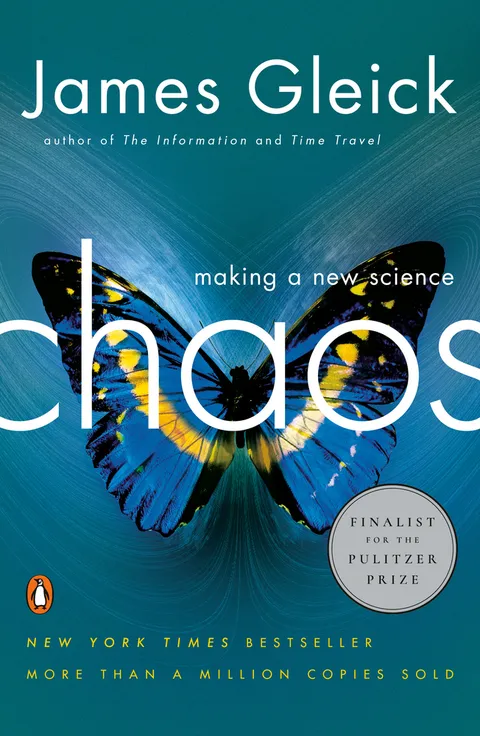
The “highly entertaining” New York Times bestseller, which explains chaos theory and the butterfly effect, from the author of The Information (Chicago Tribune).
For centuries, scientific thought was focused on bringing order to the natural world. But even as relativity and quantum mechanics undermined that rigid certainty in the first half of the twentieth century, the scientific community clung to the idea that any system, no matter how complex, could be reduced to a simple pattern. In the 1960s, a small group of radical thinkers began to take that notion apart, placing new importance on the tiny experimental irregularities that scientists had long learned to ignore. Miniscule differences in data, they said, would eventually produce massive ones—and complex systems like the weather, economics, and human behavior suddenly became clearer and more beautiful than they had ever been before.
James Gleick
James Gleick is the author of Chaos: Making a New Science, Genius: The Life and Science of Richard Feynman, and The Information: A History, a Theory, a Flood. His books have been translated into more than thirty languages. The Telephone is his ninth book.
More by James Gleick




Why Readwise Books?
Readwise Books is an ebook & audiobook platform that automatically logs how much you and your friends read, making it fun and easy to read more. Learn more →