Report an issue
Tell us what's wrong and we'll take a look.
Thanks – we got it. We'll review and follow up if needed.
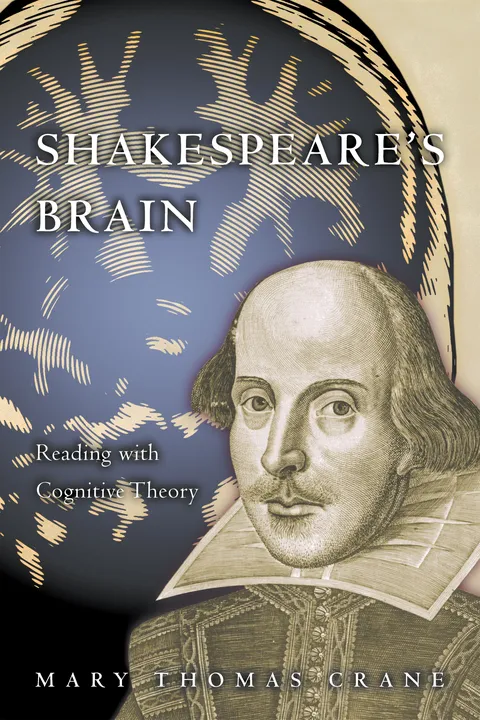
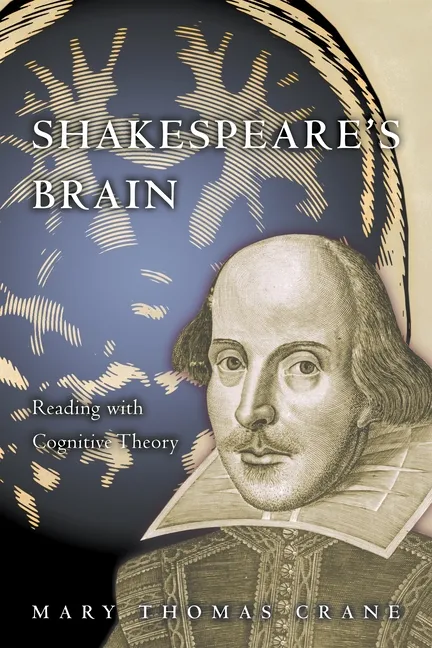
Here Mary Thomas Crane considers the brain as a site where body and culture meet to form the subject and its expression in language. Taking Shakespeare as her case study, she boldly demonstrates the explanatory power of cognitive theory--a theory which argues that language is produced by a reciprocal interaction of body and environment, brain and culture, and which refocuses attention on the role of the author in the making of meaning. Crane reveals in Shakespeare's texts a web of structures and categories through which meaning is created. The approach yields fresh insights into a wide range of his plays, including The Comedy of Errors, As You Like It, Twelfth Night, Hamlet, Measure for Measure, and The Tempest.
Crane's cognitive reading traces the complex interactions of cultural and cognitive determinants of meaning as they play themselves out in Shakespeare's texts. She shows how each play centers on a word or words conveying multiple meanings (such as "act," "pinch," "pregnant," "villain and clown"), and how each cluster has been shaped by early modern ideological formations. The book also chronicles the playwright's developing response to the material conditions of subject formation in early modern England. Crane reveals that Shakespeare in his comedies first explored the social spaces within which the subject is formed, such as the home, class hierarchy, and romantic courtship. His later plays reveal a greater preoccupation with how the self is formed within the body, as the embodied mind seeks to make sense of and negotiate its physical and social environment.
Mary Thomas Crane
Mary Thomas Crane is the Thomas F. Rattigan Professor of English and director of the Institute for the Liberal Arts at Boston College. She works on early modern English literature and is the author of Framing Authority: Sayings, Self, and Society in Sixteenth-Century England (Princeton University Press, 1993), Shakespeare’s Brain: Reading with Cognitive Theory (Princeton University Press, 2000), and Losing Touch with Nature: Literature and the New Science in Sixteenth-Century England (Johns Hopkins University Press, 2014). She has taught the Enduring Question course “Revolutionary Media: How Reading Changes Us.”
More by Mary Thomas Crane



Why Readwise Books?
Readwise Books is an ebook & audiobook platform that automatically logs how much you and your friends read, making it fun and easy to read more. Learn more →