Report an issue
Tell us what's wrong and we'll take a look.
Thanks – we got it. We'll review and follow up if needed.
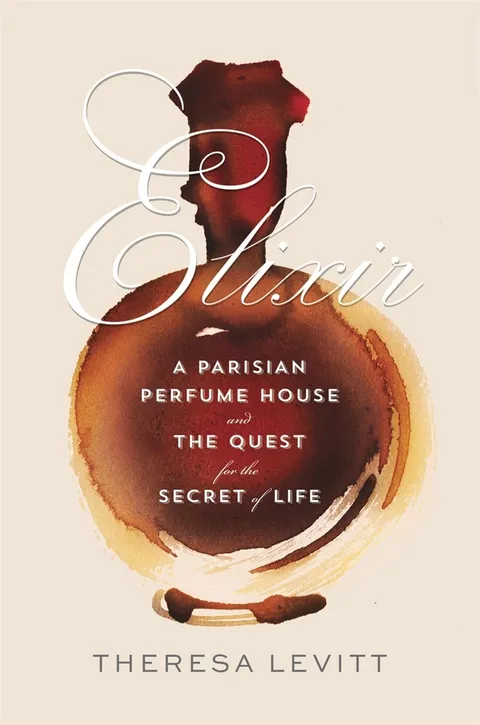
A Financial Times and Scientific American Best Book of the Year.
A story of alchemy in Bohemian Paris, where two scientific outcasts discovered a fundamental distinction between natural and synthetic chemicals that inaugurated an enduring scientific mystery.
For centuries, scientists believed that living matter possessed a special quality--a spirit or essence--that differentiated it from nonliving matter. But by the nineteenth century, the scientific consensus was that the building blocks of one were identical to the building blocks of the other. Elixir tells the story of two young chemists who were not convinced, and how their work rewrote the boundary between life and nonlife.
In the 1830s, Édouard Laugier and Auguste Laurent were working in Laugier Père et Fils, the oldest perfume house in Paris. By day they prepared the perfumery's revitalizing elixirs and rejuvenating eaux, drawing on alchemical traditions that equated a plant's vitality with its aroma. In their spare time they hunted the vital force that promised to reveal the secret to life itself. Their ideas, roundly condemned by established chemists, led to the discovery of structural differences between naturally occurring molecules and their synthetic counterparts, even when the molecules were chemically identical.
Scientists still can't explain this anomaly, but it may point to critical insights concerning the origins of life on Earth. Rich in sparks and smells, brimming with eccentric characters, experimental daring, and the romance of the Bohemian salon, Elixir is a fascinating cultural and scientific history.
Theresa Levitt
Theresa Levitt is Professor of History at the University of Mississippi, where she specialises in the history of science and French cultural history. She received a BS in physics from the Massachusetts Institute of Technology, an MA in history from Iowa State University, and a PhD in the history of science from Harvard University.
Her first book was The Shadow of Enlightenment: Optical and Political Transparency in France, 1789-1848 (CUP 2009). Philip Ball called it "an absolute treasure trove of ideas and connections," that wove together the science of light with the tumultuous politics of France during the Revolution and beyond. Her second book, A Short, Bright Flash: Augustin Fresnel and the Lighthouse Revolution appeared with W.W. Norton in 2013 and was glowingly reviewed in the Wall Street Journal and elsewhere.
More by Theresa Levitt







Why Readwise Books?
Readwise Books is an ebook & audiobook platform that automatically logs how much you and your friends read, making it fun and easy to read more. Learn more →