Report an issue
Tell us what's wrong and we'll take a look.
Thanks – we got it. We'll review and follow up if needed.
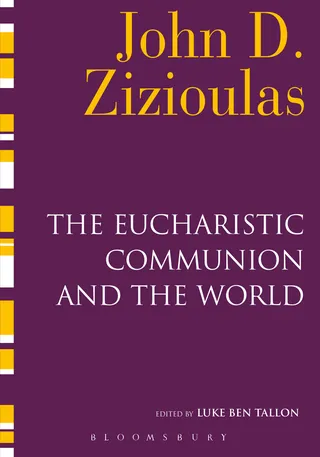
The predominating concept in theological ontology is that of a protological ontology which defines being itself as being defined by the past. The future of things in this perspective is defined by its origins and the "given" or the "factum". In this major new book John Zizioulas shows that eschatology can have important implications for ontology, i.e. for being itself. The world was created with a purpose and the end which would be greater than the beginning. This is the view of the Fathers, such as Irenaeus and Maximus, who made the end the "cause of all being". The implications of such an idea are revolutionary, both historically and experientially. It represents a reversal of the ancient philosophical idea of causality as well as of our common sense rationality, according to which the cause precedes chronologically as well as logically. It is the opposite of protological ontology, which makes the past decisive for the future. Eschatological ontology, therefore, is about the liberation of being from necessity, it is about the formation of being. Man and the world are no longer imprisoned in their past, in sin, decay and death. The past is ontologically affirmed only in so far as it contributes to the end, to the coming of the kingdom. The eschaton will 'judge' history with this criterion alone. The last judgment as part of the eschaton represents an ontological, not a moral event. Zizioulas shows how this eschatological ontology permeates Christian doctrine, particularly that of creation and ecclesiology. He also points out some of its ethical implications.
John D Zizioulas
John D. Zizioulas, Metropolitan of Pergamon, was previously Professor of Systematic Theology at the University of Glasgow and Visiting Professor at King's College, London. He is the author of Communion and Otherness (2006), and has been a major Orthodox contributor to modern ecumenical discussion.
More by John D Zizioulas


Why Readwise Books?
Readwise Books is an ebook & audiobook platform that automatically logs how much you and your friends read, making it fun and easy to read more. Learn more →