Report an issue
Tell us what's wrong and we'll take a look.
Thanks – we got it. We'll review and follow up if needed.
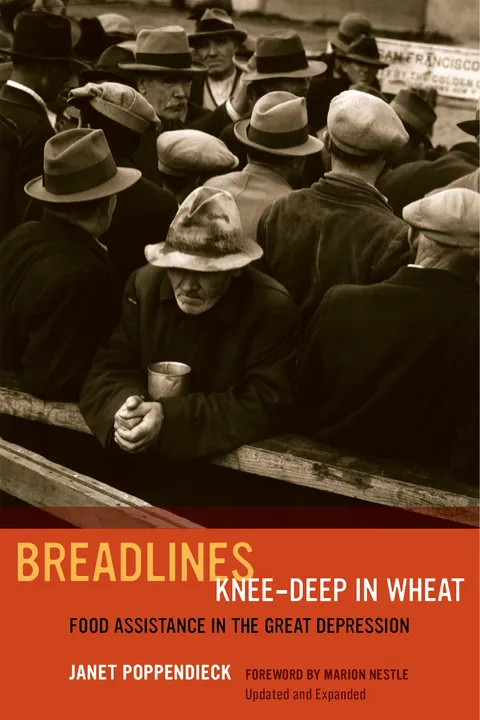
This book explains in readable narrative how the New Deal food assistance effort, originally conceived as a relief measure for poor people, became a program designed to raise the incomes of commercial farmers. In a broader sense, the book explains how the New Deal years were formative for food assistance in subsequent administrations; it also examines the performance--or lack of performance--of subsequent in-kind relief programs.
Beginning with a brief survey of the history of the American farmer before the depression and the impact of the Depression on farmers, the author describes the development of Hoover assistance programs and the events at the end of that administration that shaped the "historical moment" seized by the early New Deal. Poppendieck goes on to analyze the food assistance policies and programs of the Roosevelt years, the particular series of events that culminated in the decision to purchase surplus agriculture products and distribute them to the poor, the institutionalization of this approach, the resutls achieved, and the interest groups formed. The book also looks at the takeover of food assistance by the U.S. Department of Agriculture and its gradual adaptation for use as a tool in the maintenance of farm income. Utliizing a wide variety of official and unofficial sources, the author reveals with unusual clarity the evolution from a policy directly responsive to the poor to a policy serving mainly democratic needs.
Janet Poppendieck
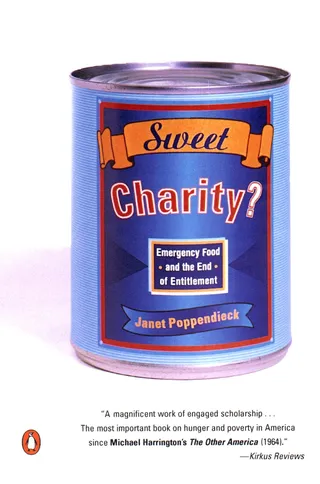
Janet Poppendieck is Professor of Sociology at Hunter College, City University of New York. She is the author of Sweet Charity? Emergency Food and the End of Entitlement and Breadlines Knee Deep in Wheat: Food Assistance in the Great Depression.
More by Janet Poppendieck


Why Readwise Books?
Readwise Books is an ebook & audiobook platform that automatically logs how much you and your friends read, making it fun and easy to read more. Learn more →