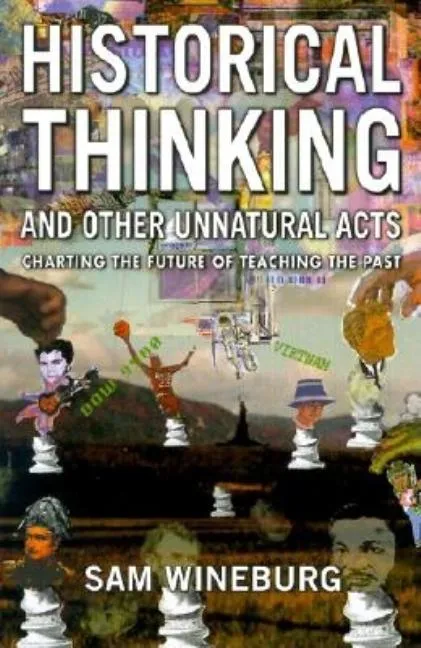
Historical Thinking
Report an issue
Tell us what's wrong and we'll take a look.
Thanks – we got it. We'll review and follow up if needed.
Although most of us think of history -- and learn it -- as a conglomeration of facts, dates, and key figures, for professional historians it is a way of knowing, a method for developing and understanding about the relationships of peoples and events in the past. A cognitive psychologist, Wineburg has been engaged in studying what is intrinsic to historical thinking, how it might be taught, and why most students still adhere to the "one damned thing after another" concept of history.
Whether he is comparing how students and historians interpret documentary evidence or analyzing children's drawings, Wineburg's essays offer "rough maps of how ordinary people think about the past and use it to understand the present." Arguing that we all absorb lessons about history in many settings -- in kitchen table conversations, at the movies, or on the world-wide web, for instance -- these essays acknowledge the role of collective memory in filtering what we learn in school and shaping our historical thinking.
Sam Wineburg
Sam Wineburg is the Margaret Jacks Professor of Education and History at Stanford University and the author of Historical Thinking and Other Unnatural Acts.
More by Sam Wineburg


Why Readwise Books?
Readwise Books is an ebook & audiobook platform that automatically logs how much you and your friends read, making it fun and easy to read more. Learn more →