Report an issue
Tell us what's wrong and we'll take a look.
Thanks – we got it. We'll review and follow up if needed.
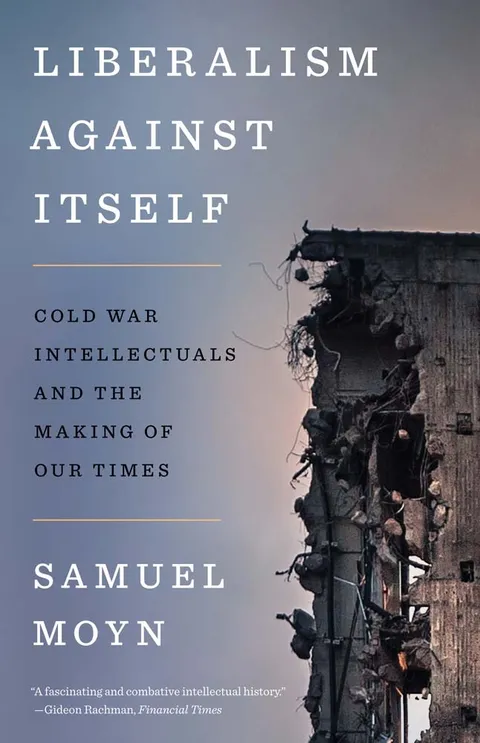
"[A] daring new book."--Becca Rothfeld, Washington Post
"A fascinating and combative intellectual history."--Gideon Rachman, Financial Times
By the middle of the twentieth century, many liberals looked glumly at the world modernity had brought about, with its devastating wars, rising totalitarianism, and permanent nuclear terror. They concluded that, far from offering a solution to these problems, the ideals of the Enlightenment, including emancipation and equality, had instead created them. The historian of political thought Samuel Moyn argues that the liberal intellectuals of the Cold War era--among them Isaiah Berlin, Gertrude Himmelfarb, Karl Popper, Judith Shklar, and Lionel Trilling--transformed liberalism but left a disastrous legacy for our time.
In his iconoclastic style, Moyn outlines how Cold War liberals redefined the ideals of their movement and renounced the moral core of the Enlightenment for a more dangerous philosophy: preserving individual liberty at all costs. In denouncing this stance, as well as the recent nostalgia for Cold War liberalism as a means to counter illiberal values, Moyn presents a timely call for a new emancipatory and egalitarian liberal philosophy--a path to undoing the damage of the Cold War and to ensuring the survival of liberalism.
Samuel Moyn
Samuel Moyn is Henry R. Luce Professor of Jurisprudence and Professor of History at Yale University. He is the author of The Last Utopia: Human Rights in History, and Christian Human Rights (2015), among other books, as well as editor of the journal Humanity. He also writes regularly for Foreign Affairs and The Nation.
More by Samuel Moyn


Why Readwise Books?
Readwise Books is an ebook & audiobook platform that automatically logs how much you and your friends read, making it fun and easy to read more. Learn more →