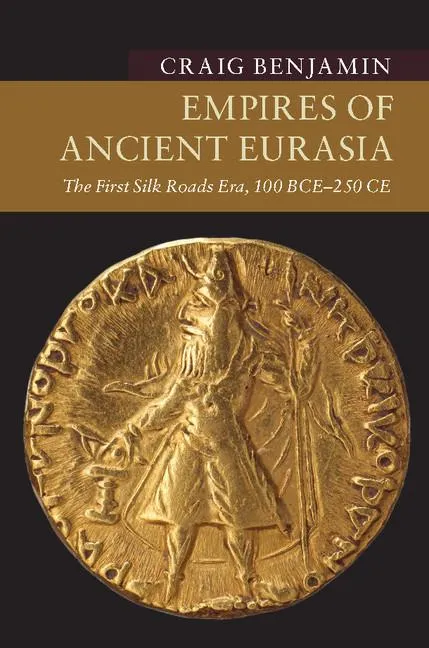
Empires of Ancient Eurasia
Report an issue
Tell us what's wrong and we'll take a look.
Thanks – we got it. We'll review and follow up if needed.
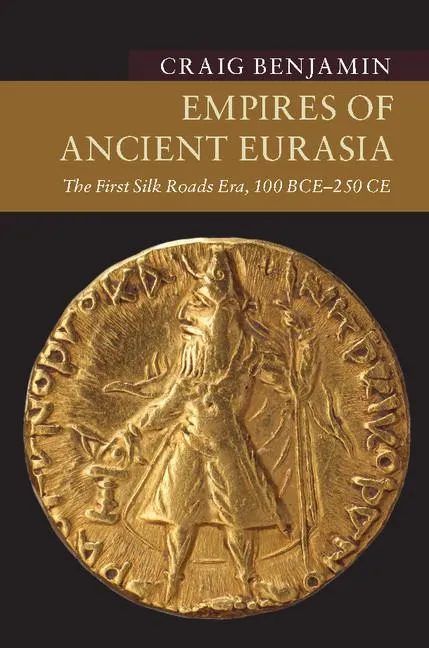
The Silk Roads are the symbol of the interconnectedness of ancient Eurasian civilizations. Using challenging land and maritime routes, merchants and adventurers, diplomats and missionaries, sailors and soldiers, and camels, horses and ships, carried their commodities, ideas, languages and pathogens enormous distances across Eurasia. The result was an underlying unity that traveled the length of the routes, and which is preserved to this day, expressed in common technologies, artistic styles, cultures and religions, and even disease and immunity patterns. In words and images, Craig Benjamin explores the processes that allowed for the comingling of so many goods, ideas, and diseases around a geographical hub deep in central Eurasia. He argues that the first Silk Roads era was the catalyst for an extraordinary increase in the complexity of human relationships and collective learning, a complexity that helped drive our species inexorably along a path towards modernity.
Craig Benjamin
CRAIG BENJAMIN (PhD, Macquarie University) is an associate professor of history in the Meijer Honors College at Grand Valley State University in Michigan. Like both his co-authors, Benjamin is a frequent presenter of lectures at conferences worldwide, and the author of numerous publications including books, chapters, and essays on ancient Central Asian history, big history, and world history. In addition, Benjamin has recorded lectures for the History Channel, The Teaching Company, and the Big History Project. He is currently a member of both the Advanced Placement and SAT World History Test Development Committees, vice president (president elect) of the World History Association, and has been treasurer of the International Big History Association since its inception in January 2011.
More by Craig Benjamin



Why Readwise Books?
Readwise Books is an ebook & audiobook platform that automatically logs how much you and your friends read, making it fun and easy to read more. Learn more →