Report an issue
Tell us what's wrong and we'll take a look.
Thanks – we got it. We'll review and follow up if needed.
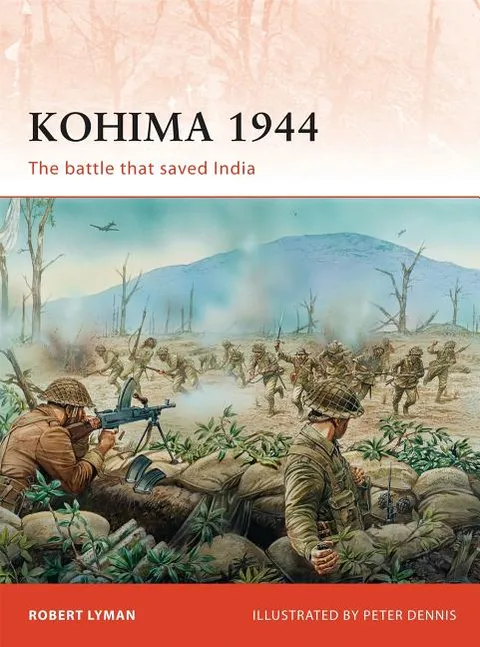
Osprey's Campaign title for the Battle of Kohima during World War II (1939-1945), which saved India from Japanese attacks. In March 1944 the Japanese Army launched Operation U-Go, an attack on Assam in India intended to inspire a rising by the Indian populace against British rule. The Japanese plan would rely on mobility, infiltration and captured supplies to maintain the momentum of the attack. A month earlier the Japanese had launched Operation Ha-Go, which was intended as a feint to draw British attention away from the Imphal area where the brunt of the U-Go attacks would take place.
But British forces employed new defensive techniques to counter the Japanese infiltration tactics; forming defensive boxes, supplied by air, they held out against determined Japanese assaults until the Japanese were forced to withdraw, short of supplies. These tactics were again employed on a larger scale when Imphal and Kohima were surrounded during Operation U-Go.
Kohima (the 'Stalingrad of the East') was the crucial key point to the successful defence of Imphal, and took place in two stages. From 3 to 16 April the Japanese attempted to capture Kohima Ridge, which dominated the road along which the British and Indian troops centred on the Imphal plain were supplied. As the small garrison held out against fierce and repeatedly desperate attempts by the Japanese 31st Division to destroy them, so the British 2nd Division fought to break through and relieve them.
Then for over two months from 18 April, British and Indian troops counter-attacked in an effort to drive the Japanese from the positions they had already captured that blocked the road to Imphal. The battle ended on June 22 when British and Indian troops from Kohima and Imphal met at Milestone 109, thus ending the siege.
Robert Lyman
Dr Robert Lyman FRHistS is a writer and historian. He is a Research Fellow at the Changing Character of War Centre, Pembroke College, University of Oxford.
After finishing a twenty year career in the British Army in 2001 he has published widely on the Second World War in Europe, North Africa and Asia.
He is Field Marshal Bill Slim's military biographer. His presentation of the case for Slim won a National Army Museum debate in 2011 for Britain's Greatest General and his case for Kohima/Imphal won a National Army Museum debate in 2013 for Britain's Greatest Battle. He was the BBC's historical adviser for the VJ commemorations in 2015 and 2020 and is a regular contributor to documentary films on aspects of the war.
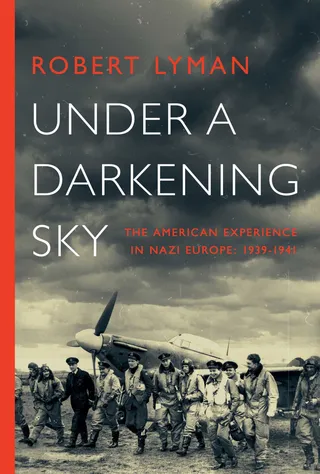
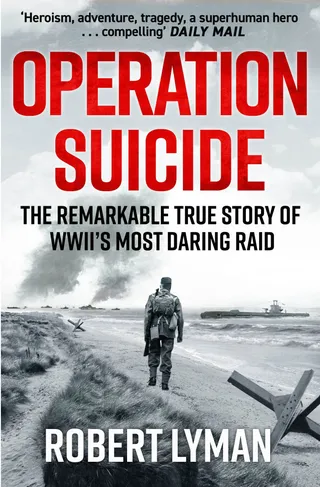
His previous books include The Longest Siege: Tobruk; Slim, Master of War; Operation Suicide and Into the Jaws of Death. He lives in Berkshire, England.
More by Robert Lyman


Why Readwise Books?
Readwise Books is an ebook & audiobook platform that automatically logs how much you and your friends read, making it fun and easy to read more. Learn more →